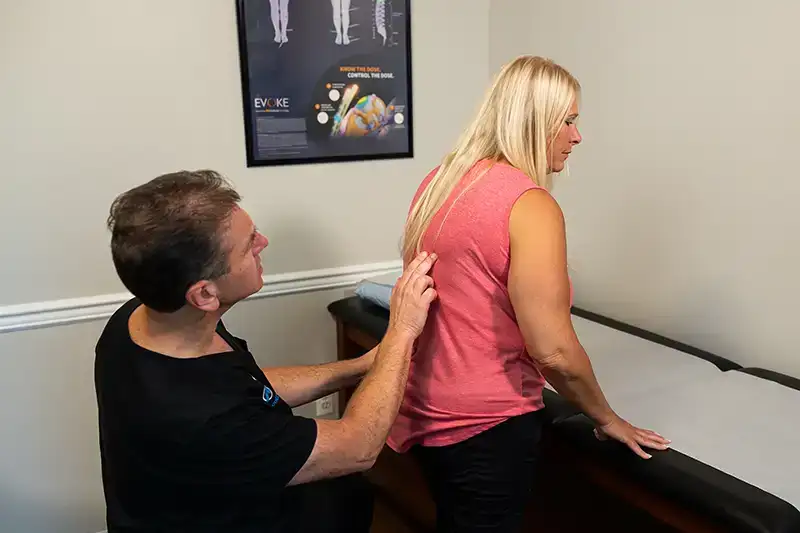
What is Low Back Pain?
Nearly everyone experiences low back pain at some point. For some, it passes within a few days. For others, it becomes a recurring problem that chips away at work, sleep, and basic daily activity. The lower back, or lumbar spine, sits at the mechanical center of almost everything the body does, supporting weight, enabling movement, and absorbing impact. That load makes it vulnerable.
Pain in this region can feel like a dull ache, a sharp catch with certain movements, or a deep stiffness that takes the first hour of the morning to shake off. When it lasts beyond a few weeks or keeps coming back, it usually means something specific is going on structurally or neurologically, and it warrants a closer look.
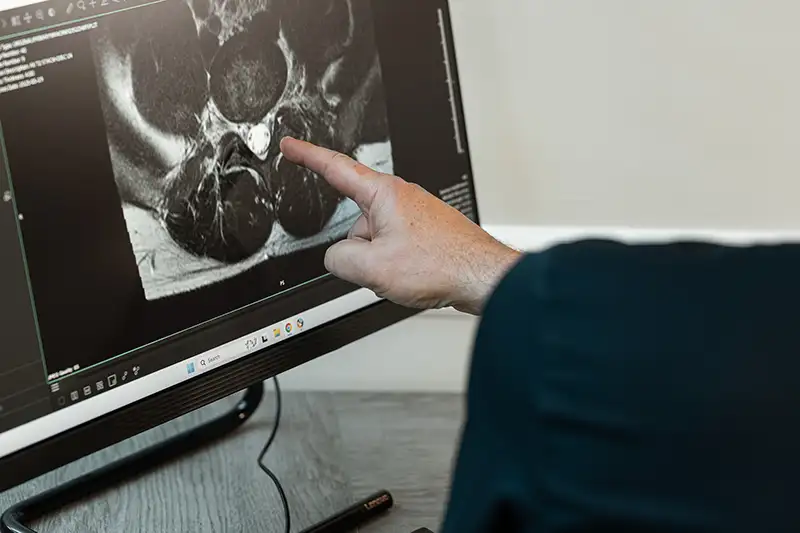
Low back pain is a symptom, not a diagnosis. At Shore Spine & Pain in Lakewood, NJ and Shrewsbury, NJ, Dr. Woska’s first priority is identifying exactly what is behind your pain.
What Causes Low Back Pain?
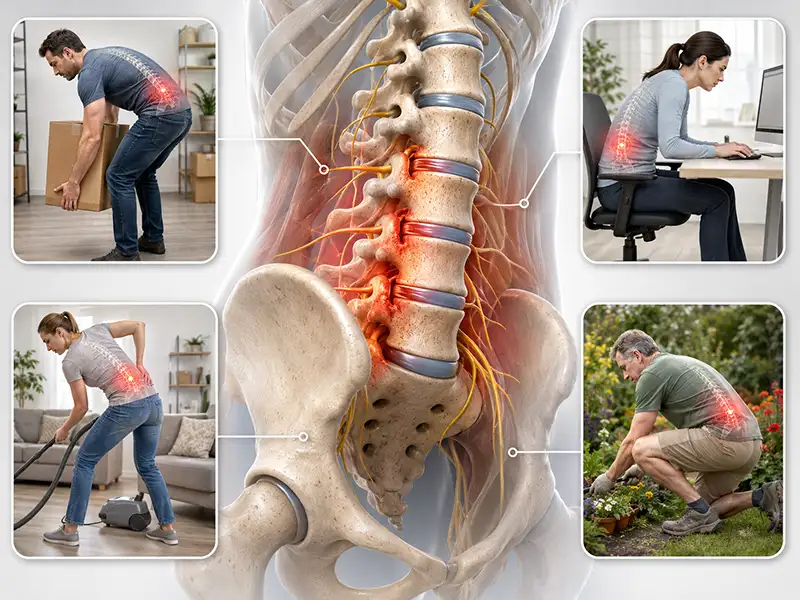
Muscle strains and ligament sprains are the most frequent causes of low back pain, often tied to a single incident like lifting something heavy with poor form or a sudden twisting motion. The pain can be surprisingly intense in the short term but typically settles down within a few weeks.
The more complex cases involve the spine itself. Intervertebral discs, which act as shock absorbers between the vertebrae, can bulge, herniate, or degenerate over time. A bulging disc occurs when the disc extends beyond its normal boundary without fully rupturing, which can be enough to irritate nearby nerve roots and produce pain, numbness, or tingling that radiates into the legs. A herniated disc goes a step further, as the disc’s soft inner material pushes through the outer wall and presses directly against a nerve root, often producing more pronounced symptoms. Degenerative disc disease, though the name sounds alarming, is largely a byproduct of aging. Discs lose hydration and height over time, which reduces their cushioning capacity and can lead to chronic pain.
Spinal stenosis is another common cause of low back pain, particularly in older adults. Here the spinal canal itself narrows, squeezing the nerve roots running through it. Facet joint syndrome, sacroiliac joint pain, and spondylolisthesis round out the most frequent structural low back pain causes.
Body weight, posture habits, sedentary work, and even smoking all influence how quickly these changes develop and how much pain they produce. Occasionally, low back pain has nothing to do with the spine at all. Kidney stones, infections, and certain gynecological conditions can refer pain to the lower back in ways that are easy to confuse with a musculoskeletal problem.
Symptoms of Low Back Pain
Low back pain varies significantly depending on what is causing it, which is why symptoms are worth paying close attention to.
Mechanical pain, the kind tied to posture, movement, and load, tends to worsen with prolonged sitting, bending, or lifting and ease up with movement or a change in position. It often comes with muscle tightness or spasm, especially after sleeping in the wrong position or sitting at a desk for extended periods.
Nerve-related pain feels different. When a disc or narrowed canal presses on a nerve root, the pain typically radiates down through the buttock and into one leg, sometimes reaching the foot. It is often described as burning, shooting, or electric, with numbness and tingling as common companions. In some cases the affected leg feels noticeably weaker. Those with spinal stenosis often notice that walking or standing for more than a few minutes brings on cramping, heaviness, or aching in the legs, while sitting or leaning forward brings relief. This pattern, called neurogenic claudication, is a telling clinical sign.
Loss of bladder or bowel control, progressive leg weakness, or saddle-area numbness are red flags that require immediate attention.
Your low back pain symptoms tell a story. At Shore Spine & Pain, Dr. Woska listens carefully to every part of it before recommending a path forward.
Treatments We Offer for Low Back Pain
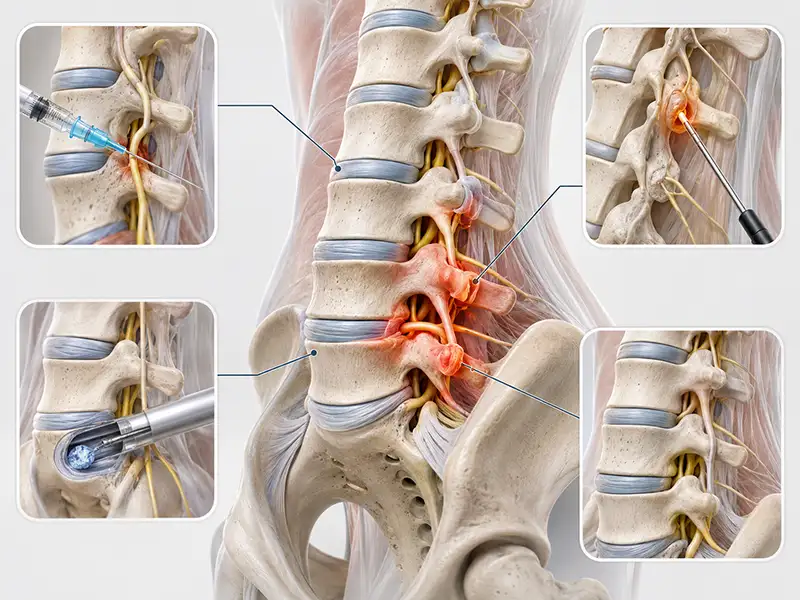
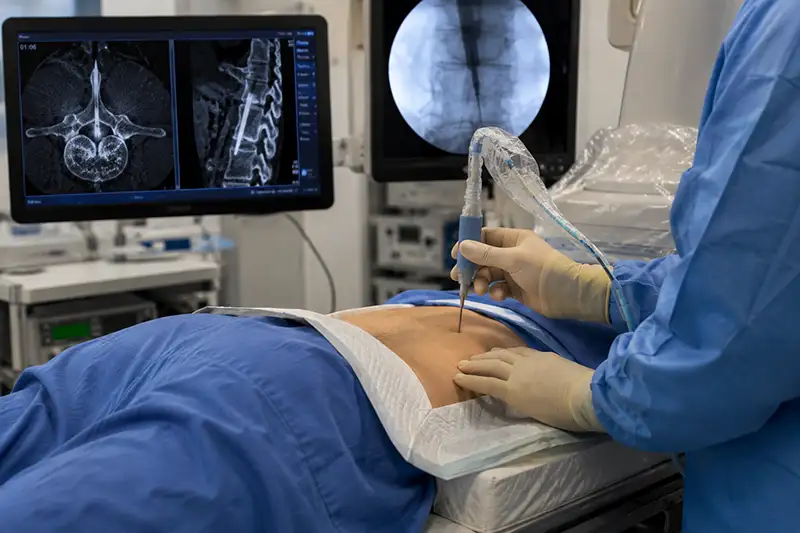
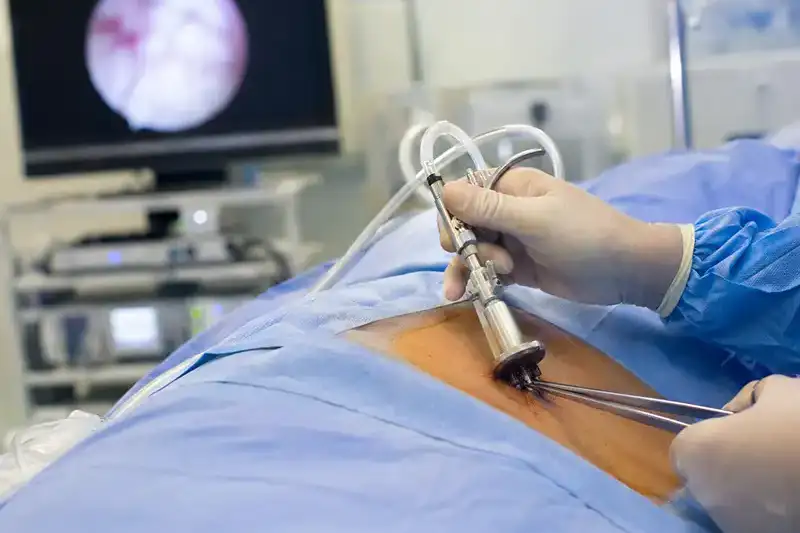
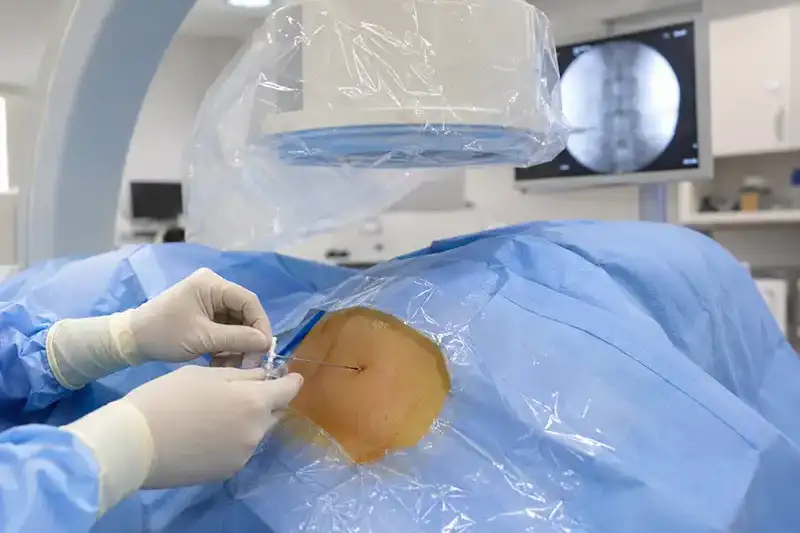
Low back pain is not a single condition, and should never be treated as one. The path to lasting low back pain relief starts with an accurate diagnosis. Shore Spine & Pain offers a comprehensive range of common low back pain treatment options.
Interventional Pain Management:
- Epidural Steroid Injections: When nerve inflammation around a disc herniation or spinal stenosis is the primary driver of pain, a corticosteroid delivered directly into the epidural space calms the irritation at the source, providing targeted relief that oral medications often cannot achieve.
- Facet Joint Injections: When the small joints connecting the vertebrae become arthritic and inflamed, targeted injections reduce inflammation and confirm the facet joints as the pain source, informing the next step in care.
- Radiofrequency Ablation: For confirmed facet joint involvement, radiofrequency ablation uses heat energy to interrupt the nerve signals carrying pain from the affected joints, with relief commonly lasting a year or longer.
- Endoscopic Rhizotomy: For cases requiring a more definitive approach to nerve-related pain, endoscopic rhizotomy precisely targets and deactivates the pain-transmitting nerves under direct visualization.
- Facet Joint Fusion: When facet joint deterioration is significant and other treatments have not provided lasting relief, facet joint fusion stabilizes the affected segment and eliminates the structural source of pain.
- SI Joint Injection: Sacroiliac joint dysfunction is frequently overlooked as a source of low back pain, yet it accounts for a meaningful portion of cases. A targeted SI joint injection confirms the diagnosis and provides meaningful relief.
- SI Joint Arthrodesis: For those with persistent SI joint dysfunction that has not responded to injections, SI joint arthrodesis provides lasting stabilization by addressing the structural instability driving symptoms.
- Basivertebral Nerve Ablation: For chronic low back pain rooted in the vertebral endplates rather than the disc or facet joints, basivertebral nerve ablation targets the specific nerve supply responsible for that pain with a minimally invasive approach.
- VIA Disc NP Procedure: For discogenic low back pain, the VIA Disc NP procedure offers a regenerative approach by restoring disc hydration and reducing the degeneration driving pain from within the disc itself.
Minimally Invasive and Surgical Options:
- MILD Spine Procedure: For low back pain driven by lumbar spinal stenosis and ligamentum flavum thickening, the MILD procedure restores space within the spinal canal through a small access point, without implants, general anesthesia, or a lengthy recovery.
- Discectomy: When a herniated disc is directly compressing a nerve and conservative treatment has not provided adequate relief, a minimally invasive discectomy removes the offending disc material precisely, relieving nerve compression while minimizing disruption to surrounding tissue.
- Minimally Invasive Spinal Fusion: For low back pain driven by spinal instability or advanced degeneration that has not responded to other treatments, fusion stabilizes the affected segment and eliminates the motion sustaining pain.
- Spinal Cord Stimulation: For chronic low back pain that has not responded to other interventions, spinal cord stimulation modifies how the nervous system perceives and transmits pain signals, with well-documented results in appropriately selected cases.
- Peripheral Nerve Stimulation: In select cases where pain is localized along a specific nerve pathway, peripheral nerve stimulation delivers targeted neuromodulation directly where it is needed.
Frequently Asked Questions about Low Back Pain
How do I know if my low back pain needs medical attention or if I should just wait it out?
Most episodes of low back pain from a muscle strain or overexertion will improve on their own within 2-4 weeks with rest, gentle movement, and over-the-counter anti-inflammatories. The situations that warrant a prompt evaluation include pain that radiates down one or both legs, numbness or tingling in the legs or feet, pain severe enough to disrupt sleep, or symptoms that are not improving after 3 to 4 weeks of conservative care. Any sudden loss of bladder or bowel control alongside back pain should be treated as an emergency.
Does stress or mental health affect low back pain?
It can, and the connection is more direct than most people expect. Chronic pain and psychological stress share overlapping neurological pathways, meaning prolonged anxiety or depression can amplify how pain signals are processed and perceived. This does not mean the pain is imaginary. It means the nervous system is operating in a heightened state that makes existing physical pain feel more intense and harder to manage. Sleep disruption, muscle tension, and reduced activity during periods of low mood can each contribute independently to worsening symptoms.
What is the difference between acute and chronic low back pain?
Acute low back pain has been present for less than 6 weeks and most commonly results from a specific injury or mechanical cause, often resolving with conservative care and time. Chronic low back pain persists beyond 3 months and tends to have a more complex origin that is less likely to self-resolve without a thorough diagnostic workup. The distinction matters because it directly shapes the treatment approach.
Will I need surgery for my low back pain?
The majority of low back pain cases do not require surgery. Most respond to some combination of medication, targeted injections, and activity modification. Surgery tends to be considered when a specific structural problem, such as a disc herniation pressing on a nerve, has not responded to several months of conservative and interventional treatment, or when neurological symptoms such as leg weakness are progressing. At Shore Spine & Pain, Dr. Woska always explores the least invasive options first and discusses surgical considerations only when the clinical picture warrants it.
Can low back pain come back after treatment?
It can, particularly when an underlying condition like degenerative disc disease or spinal stenosis is the root cause, since those are progressive by nature. That said, many people manage their condition successfully over the long term through a combination of periodic interventional treatment when needed and lifestyle adjustments such as weight management and ergonomic improvements at work. The goal of treatment at Shore Spine & Pain in Lakewood, NJ and Shrewsbury, NJ is not just to address the current episode but to reduce the frequency and severity of future ones.