What is a MILD Spine Procedure?
MILD stands for Minimally Invasive Lumbar Decompression. It is an FDA-cleared outpatient procedure used to treat a specific cause of lumbar spinal stenosis: a thickened ligament inside the spinal canal called the ligamentum flavum. This ligament runs along the back wall of the spinal canal. Over time, it can thicken and stiffen with age and wear, narrowing the canal and pressing on the nearby nerves. When that happens, lower back, buttock, and leg pain develops that gets worse with walking or standing and feels better when sitting or bending forward.
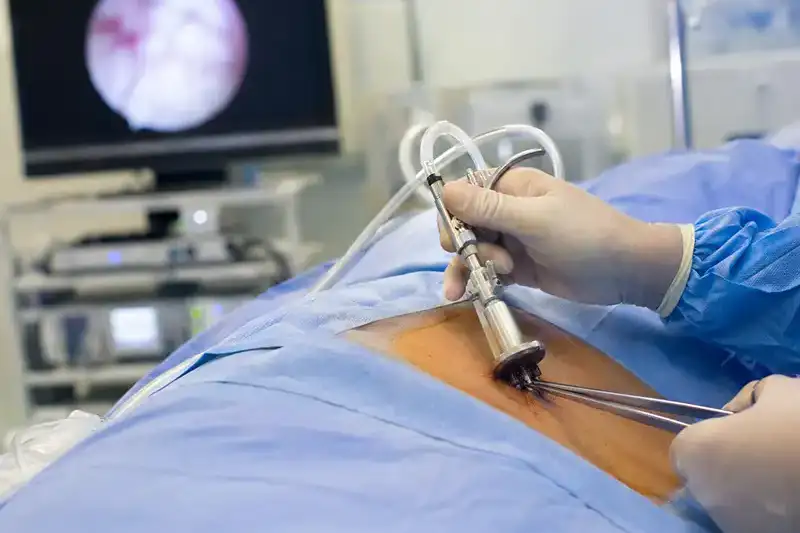
The MILD procedure accesses the affected area through a small opening roughly the size of a baby aspirin. Specialized tools are used to remove targeted portions of the thickened ligament and, if needed, small amounts of the adjacent bone. The spine’s structural stability is not affected. No implants are used, no stitches are needed, and the procedure is complete in about an hour.
MILD has strong clinical support. In a head-to-head randomized controlled trial, it produced better one-year outcomes than epidural steroid injections. Its safety record is comparable to those same injections, with a complication rate below 0.1% across more than 30,000 cases. For those who have not found lasting relief from conservative care but want to avoid open surgery, the MILD procedure at Shore Spine & Pain in Lakewood and Shrewsbury, NJ offers a well-established and precisely targeted middle ground.
Why is a MILD Spine Procedure Performed?
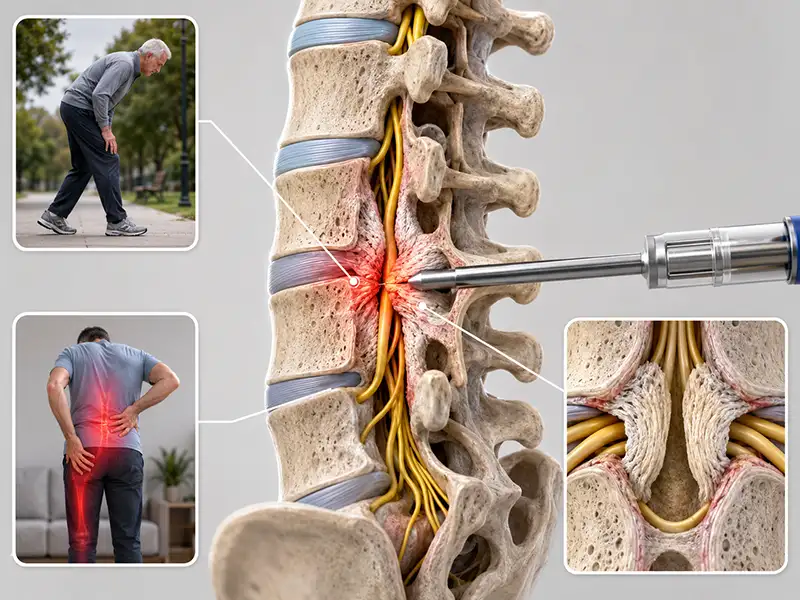
At Shore Spine & Pain, Dr. Woska recommends the MILD procedure when lumbar spinal stenosis is being driven by a thickened ligament pressing on the spinal nerves, and when conservative care including medications and injections has not provided adequate or lasting relief. Unlike injections, which reduce inflammation temporarily, MILD removes the tissue that is physically narrowing the canal. For those whose symptoms keep returning despite prior treatment, that distinction is what makes the difference.
The pattern of symptoms that points most clearly toward MILD as the right fit is one most people recognize immediately: leg pain, cramping, or numbness that builds the longer you walk or stand, and eases quickly when you sit down or lean forward. That postural relief is a reliable indicator that the ligament is the source of the compression, and it is one of the key things Dr. Woska looks for when evaluating whether MILD is appropriate for your specific situation.
Because the procedure leaves no implants and no internal scarring, it does not close off future options if additional treatment is ever needed. Dr. Woska reviews your imaging and full clinical history before any recommendation is made, ensuring that MILD is the right fit before moving forward.
How is a MILD Spine Procedure Performed?
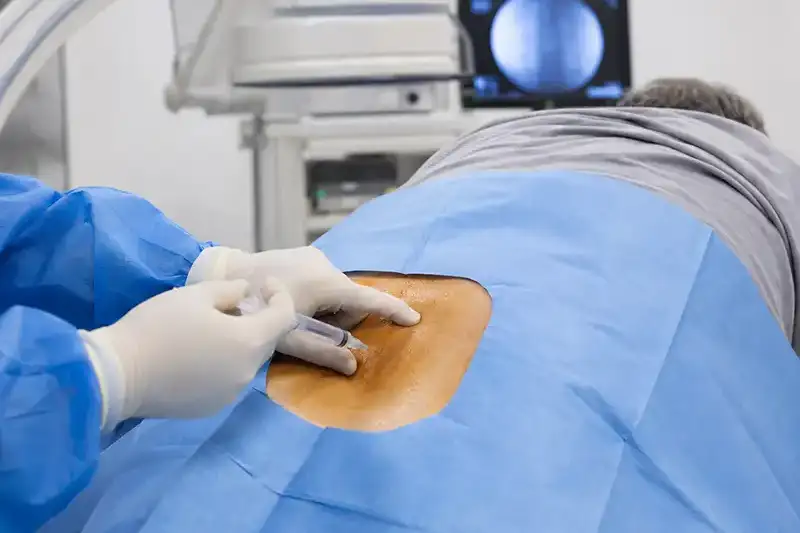
MILD is an outpatient procedure performed at Shore Spine & Pain. You will receive local anesthesia and light sedation. There is no general anesthesia, no hospital admission, and no overnight stay required.
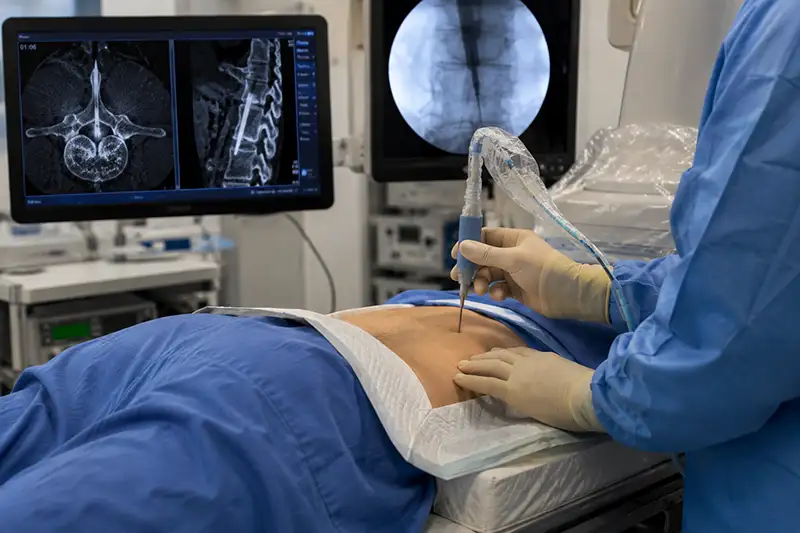
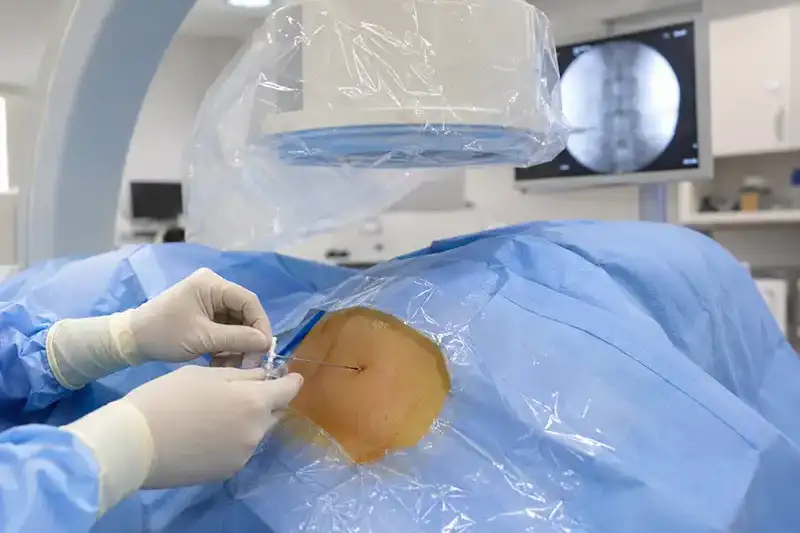
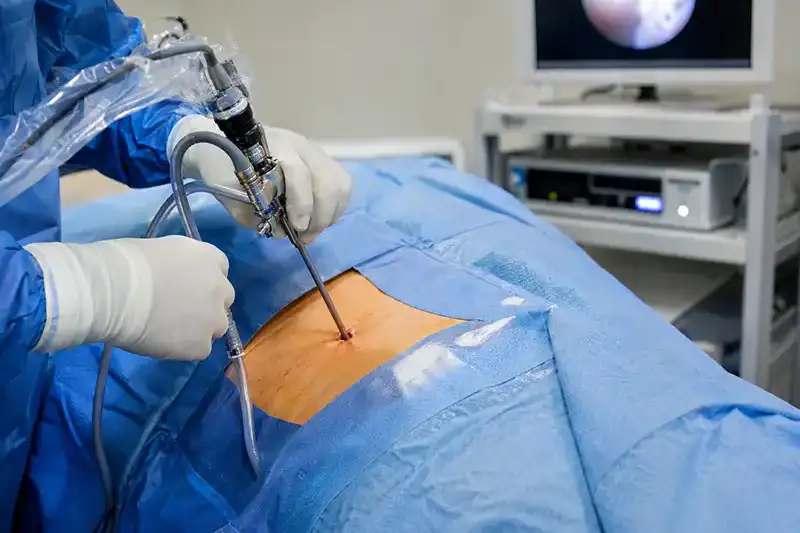
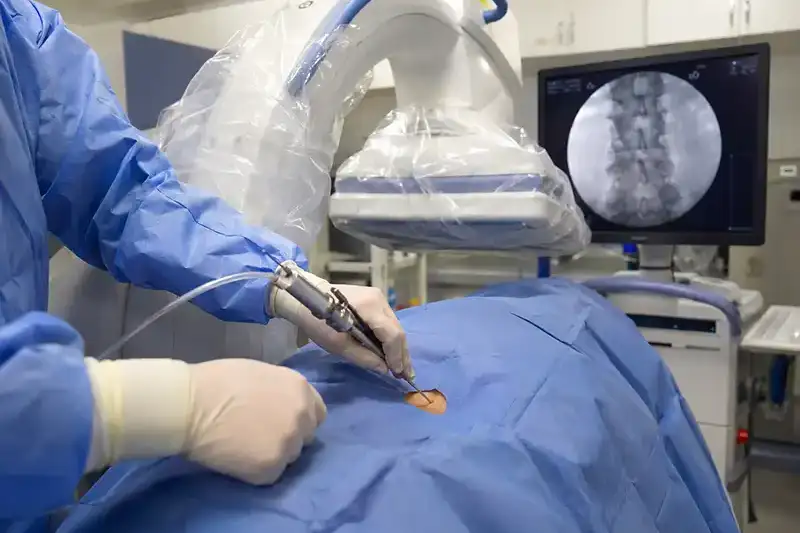
You will lie face down on the procedure table while Dr. Woska uses live X-ray imaging to locate the correct vertebral level and confirm proper positioning before beginning. A small incision is made in the skin, and a narrow tube is inserted. Through that channel, specialized instruments are used to carefully remove portions of the thickened ligament from the back wall of the spinal canal. If small amounts of adjacent bone are also contributing to compression, those may be addressed at the same time. Throughout the procedure, the innermost layer of the ligament is intentionally left intact, which protects the epidural space and prevents the internal scar tissue that can form with more invasive procedures.
The procedure takes about one hour from start to finish. No sutures are placed. The small incision site is covered with a dressing, and you are observed briefly before going home the same day.
What To Expect After a MILD Spine Procedure

Most people go home the same day and find that recovery is considerably easier than what follows open spinal surgery. There is no hospitalization, no drain to manage, and no implant-specific restrictions to follow.
Improvement in symptoms does not always happen immediately. Some people feel noticeable relief within the first few days as post-procedure swelling subsides. Others see symptoms gradually improve over several weeks as the nerves that were compressed begin to recover. Both timelines are normal and expected.
Following the procedure, heavy lifting, strenuous activity, and prolonged exertion should be avoided during the initial recovery period. Light walking is encouraged from early on. Dr. Woska schedules a follow-up visit at Shore Spine & Pain to assess how well the procedure worked and to discuss next steps if further treatment is needed. Throughout your recovery, our team in Lakewood and Shrewsbury, NJ, is available to answer questions and support your progress at every stage.
Frequently Asked Questions about MILD Spine Procedure
Am I a candidate for the MILD procedure?
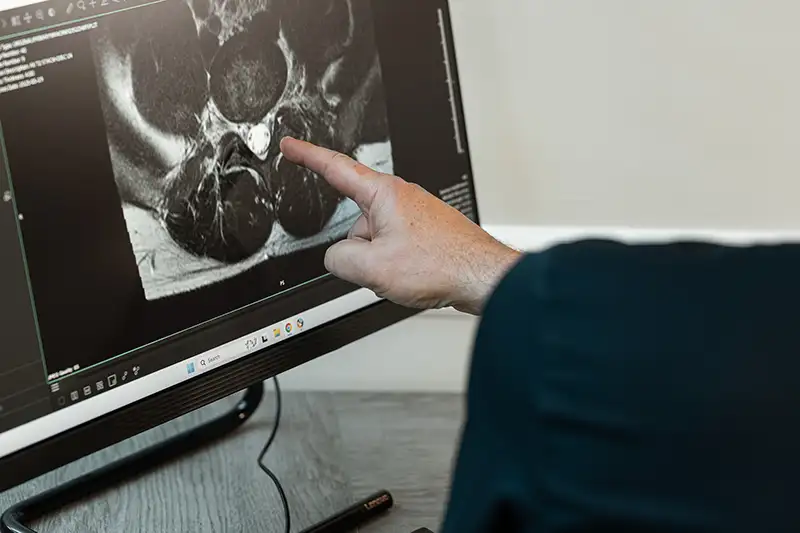
The best candidates are those with lumbar spinal stenosis caused by a thickened ligamentum flavum confirmed on MRI, who experience back and leg pain that worsens with walking or standing and have not found lasting relief from conservative treatments including injections. A stable spine is required, meaning no significant vertebral slippage or instability. Stenosis driven primarily by disc problems, bone spurs, or joint overgrowth rather than ligament thickening is generally not appropriate for MILD. Dr. Woska reviews imaging and your full clinical history to determine whether the procedure is the right fit.
Is the MILD procedure the same as back surgery?
No. MILD is a minimally invasive outpatient procedure performed through an incision roughly the size of a small pen tip. There is no general anesthesia, no hospital stay, and nothing implanted in the body. While it does involve removing tissue, the experience and recovery are far closer to an injection procedure than to open surgery. Most people are home the same day and resume light activity within a short period.
How long will the results last?
Published studies show that improvements in pain and function hold up well through at least two years following the procedure. A five-year follow-up study conducted at the Cleveland Clinic found that roughly 88% of people who underwent MILD did not require open surgical decompression at the same spinal level. Long-term outcomes vary depending on the degree of stenosis, overall spinal health, and whether additional degenerative changes develop over time. Dr. Woska discusses realistic expectations during your consultation at Shore Spine & Pain.
What happens if MILD does not fully relieve my symptoms?
If MILD does not achieve sufficient relief, all treatment options remain available. Because no implants are placed and the inner layer of the ligament is preserved, no scar tissue forms inside the spinal canal. Epidural steroid injections, additional decompression procedures, and open surgery remain accessible without any complication from the prior MILD procedure. Dr. Woska monitors your response closely and maps out next steps if further treatment is warranted at Shore Spine & Pain.
Does insurance cover the MILD procedure?
MILD is covered by Medicare and Medicare Advantage plans, and many private insurance carriers cover it as well. Approval typically requires imaging documentation of ligamentum flavum thickening and evidence that conservative treatments were tried without adequate relief. Coverage details vary by plan, and the Shore Spine & Pain team in Lakewood and Shrewsbury, NJ, works with you to verify your benefits and confirm coverage before scheduling. Contact us with any questions about your coverage or to get started.