What is an SI Joint Injection?
The sacroiliac joints connect the base of the spine to the pelvis, one on each side. An SI joint injection is a minimally invasive procedure that delivers corticosteroid medication directly into the sacroiliac joint space. The goals are twofold: to reduce inflammation within the joint and to confirm that the SI joint is the actual source of your pain. Because sacroiliac joint pain frequently mimics lumbar spine pathology, the procedure serves both a therapeutic and a diagnostic function.
Sacroiliac joint dysfunction is more common than most people realize, and it is frequently missed. If your MRI came back normal or your back pain has not responded to treatments aimed at the disc or the spine, the SI joint may be what has been overlooked. For many people living with unexplained lower back pain in the Lakewood or Shrewsbury, NJ area, an SI joint injection is the step that finally provides a clear answer and points treatment in the right direction.
The procedure is performed on an outpatient basis under fluoroscopic guidance and is typically completed in under thirty minutes.
Why is an SI Joint Injection Performed?
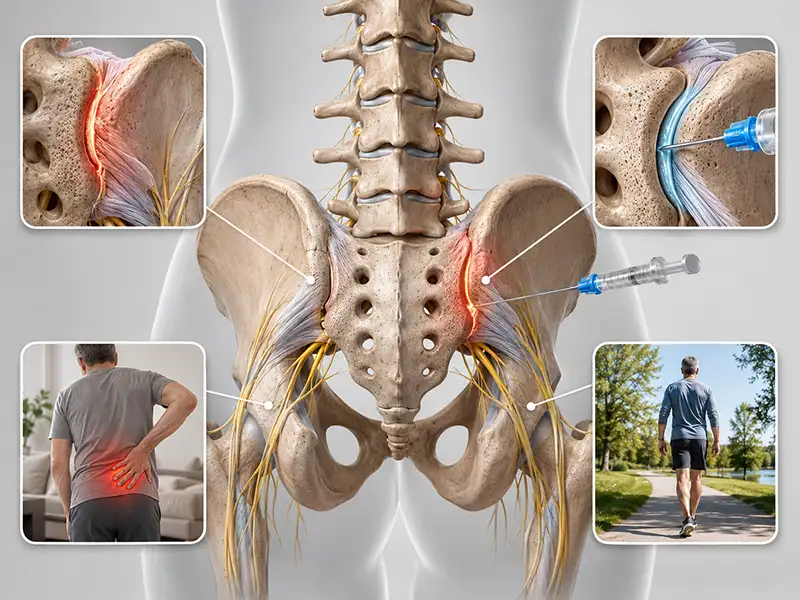
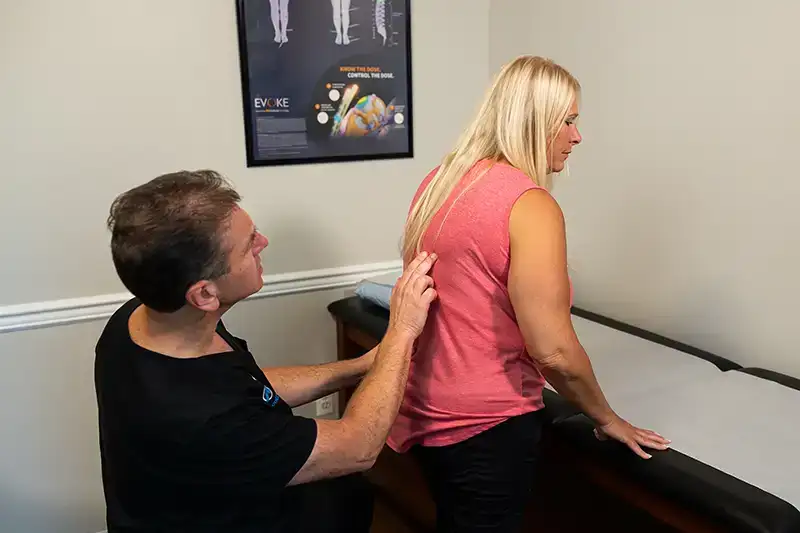
An SI joint injection is recommended when sacroiliac joint dysfunction is suspected as the cause of lower back, buttock, hip, or referred leg pain. The condition is frequently overlooked in initial evaluations because its symptom pattern overlaps significantly with disc pathology, nerve root compression, and hip joint disease. A thorough clinical assessment is an important part of determining whether this procedure is appropriate.
Dr. Woska recommends an SI joint injection at Shore Spine & Pain when one or more of the following is present:
- Pain in the lower back, buttock, or posterior hip that worsens with prolonged sitting, standing, stair climbing, or transitioning from seated to standing
- Tenderness directly over the SI joint on examination
- Positive findings on provocative SI joint stress tests performed during evaluation
- Low back or pelvic pain that developed or significantly worsened following pregnancy, childbirth, or pelvic trauma
- Persistent or new-onset pain in the SI joint region following lumbar spine surgery
- Inflammatory conditions affecting the sacroiliac joint, including sacroiliitis or ankylosing spondylitis
The injection may also be recommended when advanced imaging has been inconclusive or when clinical findings point strongly to the SI joint despite normal MRI results. Standard imaging does not always show what is happening inside the SI joint, which is why how your pain responds to the injection itself often tells Dr. Woska more than an MRI can. If the injection produces clear, temporary relief, that response confirms the joint as the pain generator and informs the plan for subsequent, long-term treatment.
How is an SI Joint Injection Performed?
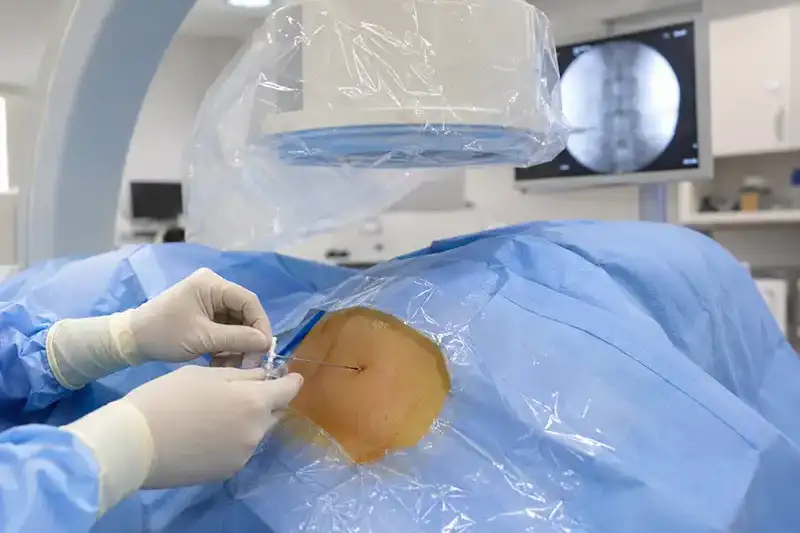
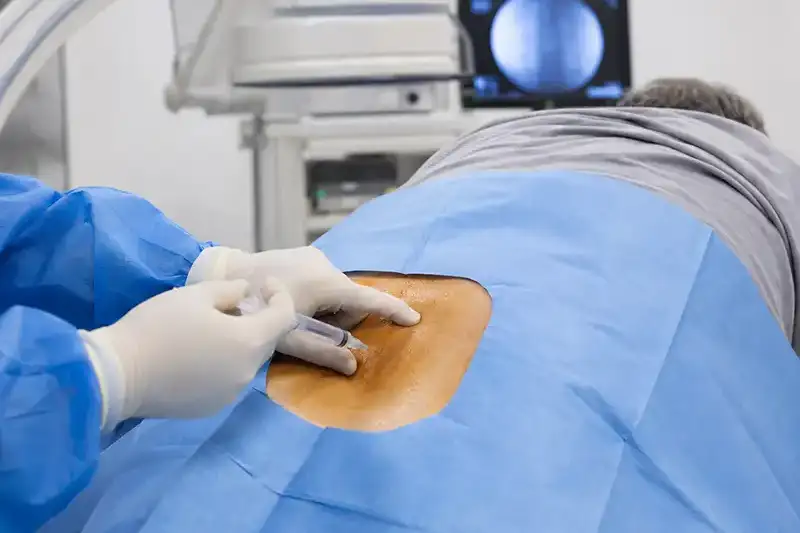
You will be positioned face down on a procedure table at Shore Spine & Pain, and the treatment area will be cleaned and prepared before anything begins. A local anesthetic is applied to the skin to minimize discomfort, so most people find the procedure considerably more comfortable than they expected.
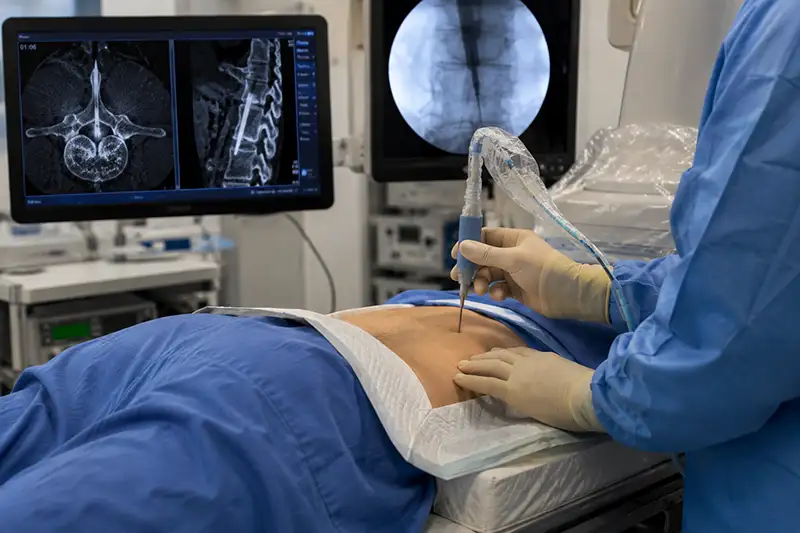
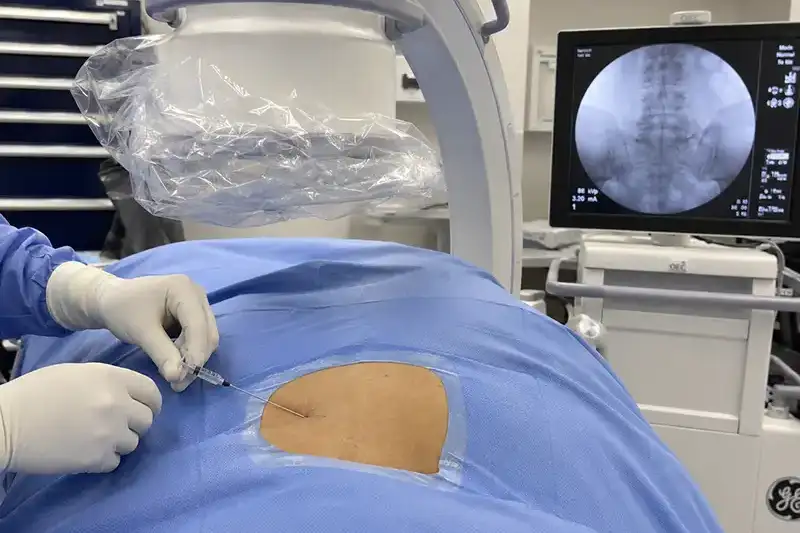
Dr. Woska uses live fluoroscopic imaging throughout, which provides a continuous real-time view of the joint and allows the needle to be guided to precisely the right location. Before any medication is delivered, a small amount of contrast dye is injected first. That dye confirms the needle is correctly positioned within the SI joint before the next step begins.
Once placement is confirmed, Dr. Woska delivers a combination of a corticosteroid and a local anesthetic directly into the joint. The corticosteroid works to reduce inflammation over the days that follow, while the local anesthetic provides more immediate relief. How your pain responds to that anesthetic also gives Dr. Woska important diagnostic information about whether the SI joint is the true source of your symptoms.
When the injection is complete, a small dressing is applied and you are monitored briefly before going home. The procedure itself typically takes around 15 to 20 minutes from start to finish.
What To Expect After an SI Joint Injection

You will be monitored briefly following the procedure and are able to return home the same day. Some soreness at the injection site is normal and typically resolves within 1 to 2 days. Light daily activities can generally be resumed without restriction, though strenuous physical activity should be avoided on the day of the injection.
The corticosteroid begins working over the following days, with most people noticing meaningful improvement within 3 to 7 days. Full benefit is generally reached within 2 to 3 weeks.
How long relief lasts varies from person to person. Many people experience substantial improvement lasting several weeks to several months, depending on the severity and underlying cause of joint inflammation. That window of reduced pain can be used productively to address contributing factors such as joint instability or muscular imbalance, which may help extend the benefit beyond the injection itself.
If your pain responds well to an SI joint injection but relief is temporary, a repeat injection may be appropriate. Most people are candidates for up to 3 injections within a 12-month period, guided by how well you respond and your overall treatment goals. For those with confirmed structural instability driving the dysfunction, SI joint arthrodesis offers a minimally invasive option that addresses the mechanical source of pain directly rather than managing symptoms alone.
Dr. Woska will review the full range of options with you at Shore Spine & Pain in Lakewood or Shrewsbury, NJ, based on your response to treatment and your individual circumstances.
Frequently Asked Questions about SI Joint Injections
How do I know if my pain is coming from the SI joint?
Sacroiliac joint dysfunction does not produce a symptom pattern unique to the joint itself. Pain in the lower back, buttock, and posterior hip can originate from multiple structures, including lumbar discs, facet joints, and the surrounding musculature. There is no imaging study that confirms the diagnosis in isolation. Dr. Woska uses a combination of detailed history, targeted physical examination, and a review of prior diagnostic workup to build a complete clinical picture. For many people, the clearest confirmation comes from the injection itself: if a precisely placed injection produces temporary but distinct relief, that response identifies the SI joint as the source more reliably than imaging alone, and opens the door to longer-lasting treatment options such as radiofrequency ablation or SI joint arthrodesis. A consultation at Shore Spine & Pain in Lakewood or Shrewsbury, NJ is the best place to start if you suspect your pain may be coming from this joint.
Is the procedure painful?
Most people tolerate the procedure without significant difficulty. A local anesthetic is applied before the needle is introduced, which substantially reduces discomfort during placement. The sensation is typically described as pressure rather than sharp pain. Some soreness at the injection site is normal in the day or two that follow and resolves on its own. If you have concerns about discomfort, discuss them with Dr. Woska ahead of your appointment at Shore Spine & Pain, as additional comfort measures can be arranged.
How long does the relief last?
There is meaningful variation from person to person. The local anesthetic may produce noticeable relief within hours, but this effect is short-lived and fades as the medication clears the joint. The corticosteroid takes several days to reach its full effect and, for those who respond well, relief can persist for several weeks to several months. For those whose relief is real but not durable, the injection results provide useful guidance for selecting a more lasting treatment approach. If the SI joint is confirmed as the pain source, radiofrequency ablation of the lateral branch nerves or SI joint arthrodesis may be appropriate next steps depending on your specific situation.
What are the risks?
SI joint injections carry a low risk profile when performed under fluoroscopic guidance. The most common side effects are temporary soreness and minor bruising at the injection site, both of which resolve without treatment. Infection is uncommon, as sterile technique is observed throughout the procedure. Those with diabetes should be aware that corticosteroid medication can temporarily elevate blood glucose for one to several days. Dr. Woska reviews your medical history, medications, and relevant health factors before proceeding to identify any circumstances that require individualized precautions.
What happens if the injection does not provide relief?
A negative or unclear response is still clinically meaningful. If a well-placed injection into the SI joint produces no relief, that outcome suggests the joint is not the primary pain source and redirects evaluation toward other structures such as a herniated disc or spinal stenosis. If relief occurs but is partial or short-lived, that pattern helps Dr. Woska determine which next steps are most appropriate, whether that is a repeat injection, radiofrequency ablation, or a longer-term stabilization option. Neither outcome leaves you without a path forward. Results from the injection, whether positive or negative, become part of the clinical picture reviewed at your follow-up visit at Shore Spine & Pain.