What is Electrodiagnostic Testing?
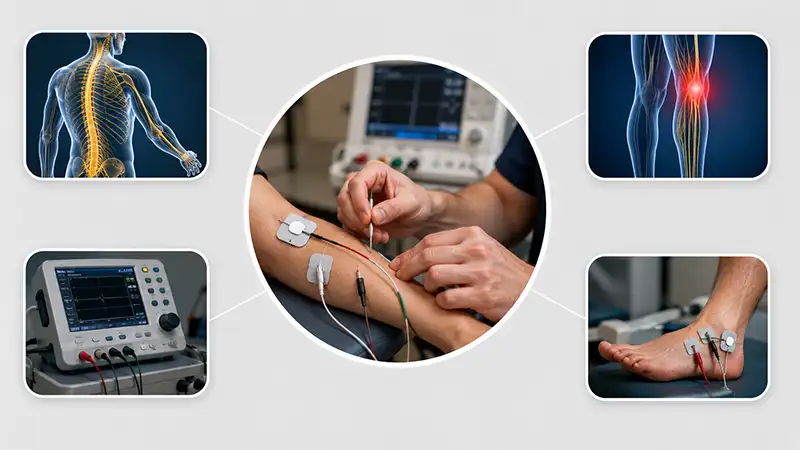
Electrodiagnostic testing measures the electrical activity of muscles and the nerves that control them. The term EMG refers to electromyography, which is one of two components that make up a full electrodiagnostic evaluation. The other is a nerve conduction study. Together, they provide a detailed look at how your nervous system and muscles are actually functioning, not just how they appear on imaging.
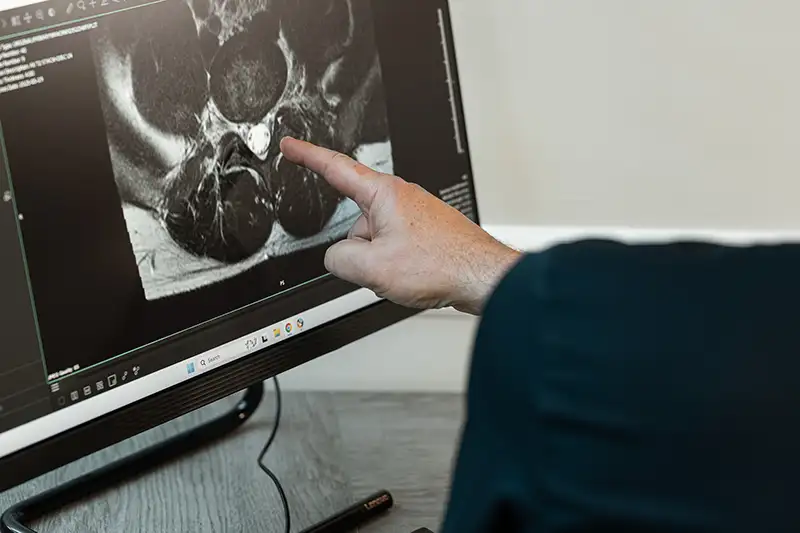
An MRI or X-ray reveals structure, electrodiagnostic testing reveals function. Two people with similar imaging findings can have significantly different nerve and muscle involvement, and without this level of information, the underlying cause of symptoms can be easy to miss or misattribute. The procedure is safe, well-established, and has been used in clinical practice for decades to evaluate a wide range of neurological and musculoskeletal conditions.
At Shore Spine & Pain in Lakewood and Shrewsbury, NJ, electrodiagnostic testing is one of the tools Dr. Woska uses to ensure that every treatment plan is built on an accurate diagnosis rather than assumptions. If you are experiencing nerve-related symptoms and want a clearer picture of what is driving them, contact us today to schedule a consultation.
Why is Electrodiagnostic Testing Performed?
When nerves are compressed, injured, or not transmitting signals the way they should, the effects show up as pain, numbness, tingling, or muscle weakness. These symptoms can stem from several different sources, and identifying the correct one is what makes treatment effective.
Electrodiagnostic testing is ordered to determine whether symptoms are coming from a nerve, a muscle, or the point where the two meet. It is commonly used to evaluate conditions including carpal tunnel syndrome, sciatica, peripheral neuropathy, cervical or lumbar radiculopathy from a herniated disc, and neuromuscular disorders affecting muscle function. It can also help establish the severity of nerve involvement and track whether a condition is improving or progressing over time.
For many, this testing is the deciding factor in building a treatment plan that addresses the root of the problem rather than simply managing symptoms without a clear diagnosis. When nerve-related symptoms are present alongside conditions such as spinal stenosis, degenerative disc disease, or spondylolisthesis, electrodiagnostic testing provides the objective data that imaging alone cannot offer.
How is Electrodiagnostic Testing Performed?
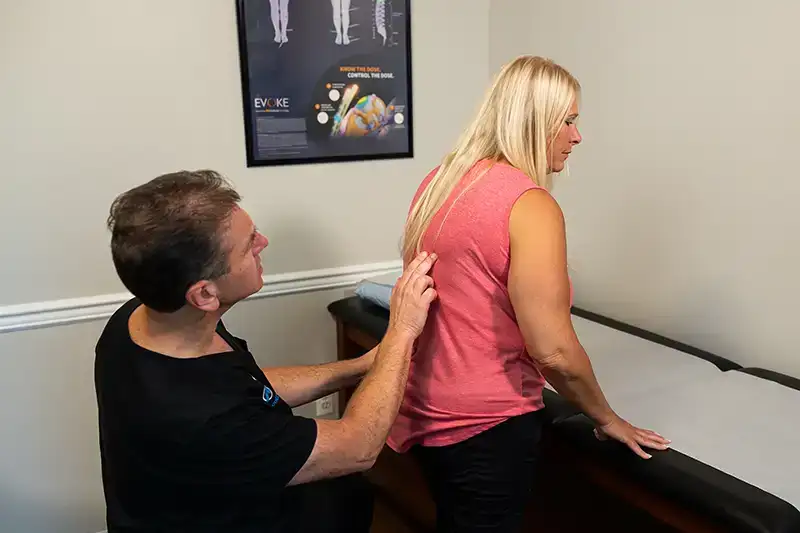
Electrodiagnostic testing is performed in a clinical setting by Dr. Woska and typically takes between 30 and 60 minutes to complete, depending on the number of nerves and muscles being evaluated. No special preparation is required beforehand, and there is no recovery period afterward. The evaluation is made up of two parts, typically performed during the same appointment.
Nerve Conduction Study
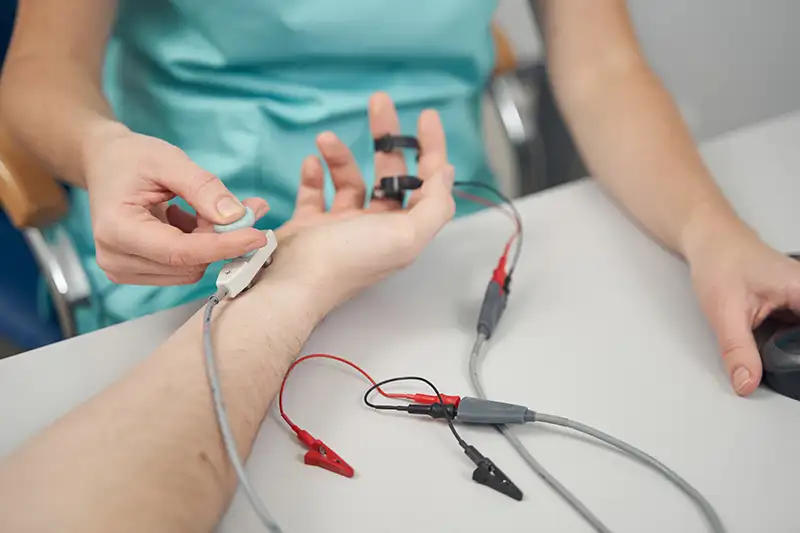
The session begins with the nerve conduction study. Small electrode patches are placed on the skin over the nerve being examined. A controlled electrical impulse is delivered through one electrode while a second records the signal as it travels along the nerve pathway. The speed and strength of that signal are then compared against normal reference values for someone of similar age and build. When a nerve is compressed or damaged, signals slow down, weaken, or both, and those changes are clearly visible in the recorded data. Most people describe the sensation as a brief tingling or a small involuntary muscle twitch that passes within seconds.
Needle EMG
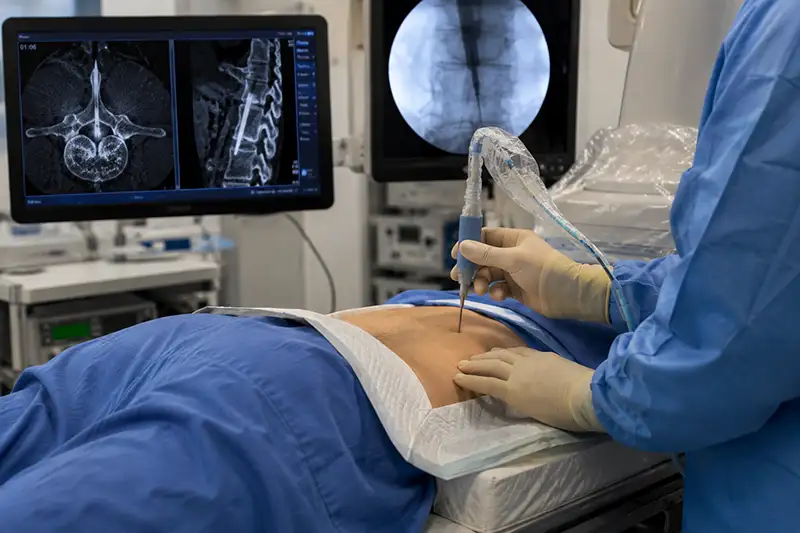
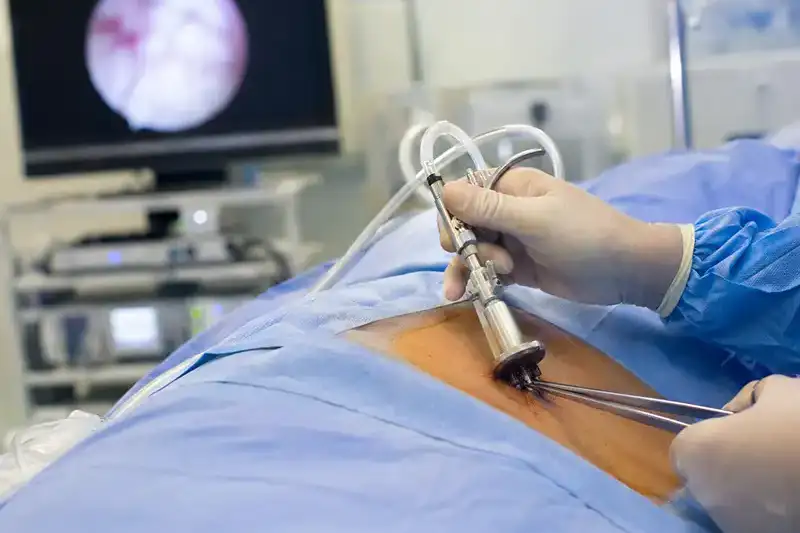
Following the nerve conduction study, a thin sterile needle electrode is inserted into specific muscles based on your symptoms and the areas being evaluated. The needle records electrical activity while the muscle is at rest and while it is contracting. You will be asked to relax the muscle fully and then gradually tighten it as Dr. Woska monitors the signals on a screen. Healthy muscle produces consistent, recognizable patterns. Muscle that has lost proper nerve input generates abnormal signals that help identify where the disruption is occurring and how significant it is. Depending on your symptoms, several muscles may be tested. Some notice mild discomfort during needle insertion, though the sensation is short-lived.
What To Expect After Electrodiagnostic Testing

Most people leave the appointment and return to their normal routine the same day. There are no restrictions on activity following the procedure, and no recovery period is required.
Some mild muscle soreness at the needle insertion sites is normal and typically resolves within a day or two. Bruising at the site is uncommon but possible. If soreness persists beyond a few days or you notice any unusual swelling, contact the team at Shore Spine & Pain in Lakewood or Shrewsbury, NJ immediately.
Dr. Woska reviews the findings from both the nerve conduction study and the needle examination together, as neither component tells the full story on its own. Once the results are interpreted, the findings are discussed directly with you in the context of your symptoms, and the most appropriate next steps are outlined. Depending on what the evaluation reveals, those next steps may include an interventional procedure such as an epidural steroid injection or radiofrequency ablation, medication management, or additional diagnostic workup before moving forward with treatment.
Frequently Asked Questions about Electrodiagnostic Testing
Is electrodiagnostic testing painful?
Discomfort levels vary, but most people tolerate the procedure well. The nerve conduction study produces a brief tingling or involuntary muscle twitch from the electrical impulse, which passes within seconds. The needle portion can cause mild soreness during and after insertion, though significant pain is not typical. Any residual muscle tenderness at the tested sites usually resolves within a day or two.
How long does the appointment take?
Most evaluations take between 30 and 60 minutes. The length depends on how many nerves and muscles need to be assessed. A more focused evaluation may take less time, while a broader workup covering multiple areas will take longer. Dr. Woska will have a clearer sense of the expected duration once your symptoms and medical history have been reviewed at Shore Spine & Pain in Lakewood or Shrewsbury, NJ.
How soon will I receive my results, and what happens after the test is complete?
Electrodiagnostic testing produces results in real time, meaning Dr. Woska is interpreting the data as the study is being performed rather than sending it to an outside lab for analysis. By the end of the appointment, a preliminary picture of your nerve and muscle function is already available. A formal report is typically completed shortly after, and the findings are reviewed with you directly so you understand what the results mean for your diagnosis and what the recommended next steps are. At Shore Spine & Pain in Lakewood and Shrewsbury, NJ, the goal is to ensure that by the time you leave, you have a clearer understanding of what is driving your symptoms and a defined direction for care.
Can I take my medications the day of the test?
In most cases, yes. Continue taking your regular medications unless Dr. Woska has advised otherwise. When scheduling, let the office know about any blood thinners or other medications you are currently taking so the team can flag anything that may be relevant before your appointment.
Is electrodiagnostic testing covered by insurance?
EMG and nerve conduction studies are considered medically necessary diagnostic procedures and are covered by most major insurance plans when ordered for an appropriate clinical reason. Because coverage details vary by plan and provider, it is a good idea to confirm your benefits with your insurance company before your appointment to avoid any surprises. The team at Shore Spine & Pain in Lakewood and Shrewsbury, NJ is available to help answer any questions about the process.