What is Degenerative Disc Disease?
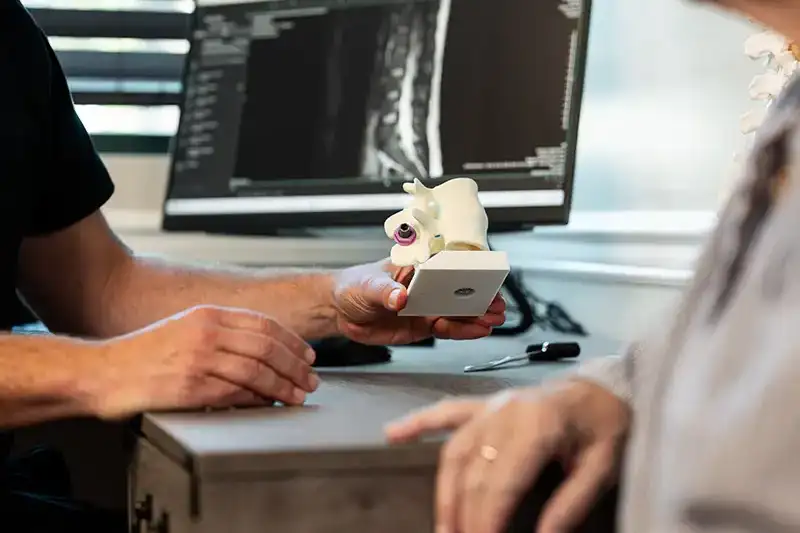
Between each pair of vertebrae in your spine sits a disc that plays a quiet but essential role in nearly every movement you make. Its job is twofold: to act as a cushion that absorbs the forces generated by walking, bending, and lifting, and to serve as a flexible connector that keeps the vertebrae properly spaced and aligned. Each disc has a layered structure, with a tough outer ring of fibrous cartilage, the annulus fibrosus, surrounding a soft, gel-like core called the nucleus pulposus. This combination of firmness and flexibility is what allows the spine to handle the demands of daily life without breaking down under the load.
Over time, these discs can begin to break down. They lose moisture and height, become less effective at cushioning the vertebrae, and can develop small cracks or tears in the outer ring. This process is a spine condition called degenerative disc disease or DDD.
Degenerative disc disease can occur anywhere along the spine but is most commonly found in the cervical (neck) and lumbar (lower back) regions, where movement and mechanical load are the greatest. It can affect a single disc or multiple discs simultaneously and is often discovered incidentally on imaging studies performed for other reasons. If you are experiencing chronic neck or back pain in the Lakewood or Shrewsbury, NJ area, Shore Spine & Pain offers the diagnostic expertise to identify the source and address it directly.
What Causes Degenerative Disc Disease?
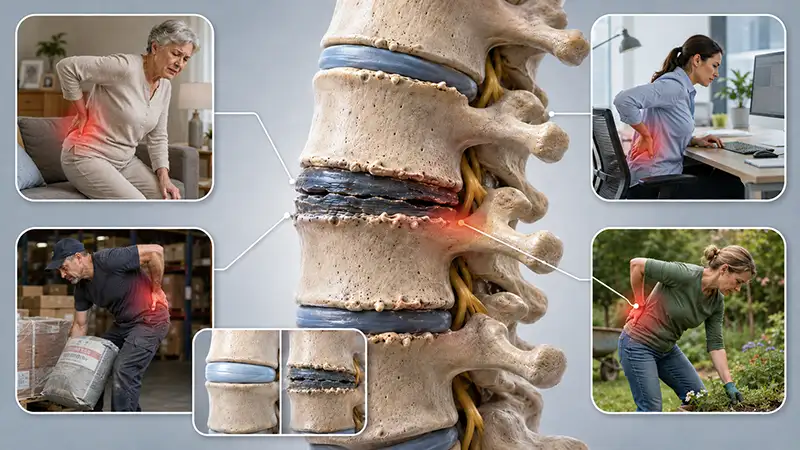
The most fundamental cause of degenerative disc disease is the natural wear-and-tear of aging. Several other factors can accelerate or worsen disc degeneration:
- Genetics: A family history of disc problems increases the likelihood of developing DDD at an earlier age or with greater severity, regardless of lifestyle.
- Repetitive Physical Stress: Jobs or activities involving prolonged sitting, heavy lifting, bending, or twisting place chronic mechanical demands on the discs. Over time, this stress accelerates the breakdown of disc tissue and can cause small tears in the outer fibrous ring.
- Injury and Trauma: A fall, accident, or sports-related injury can damage disc tissue and trigger an inflammatory response, speeding up the degenerative process. In some cases, a single traumatic event can cause a previously healthy disc to begin breaking down prematurely.
- Lifestyle Factors: Smoking reduces blood flow and nutrient delivery to the spine, depriving disc cells of the oxygen they need to stay healthy. Excess body weight places additional compressive force on the lumbar discs with every step, accelerating wear.
- Poor Posture and Sedentary Habits: Prolonged sitting, particularly with a forward-leaning posture, increases intradiscal pressure and places uneven loads on the spine, contributing to disc breakdown over time.
Symptoms of Degenerative Disc Disease
The symptoms of degenerative disc disease can vary widely. While some people with significant disc degeneration experience little to no pain, others live with chronic, debilitating discomfort even with modest disc changes. The location, severity, and character of symptoms depend largely on which discs are affected and whether nearby nerves are being compressed or irritated.
- Chronic, Low-Grade Pain: A dull, aching discomfort centered in the neck or lower back that has persisted for months or years is among the most common presentations. This baseline pain may occasionally flare into more intense episodes lasting days or weeks, often triggered by physical activity, prolonged sitting, or sudden movements.
- Radiating Pain: As a degenerating disc bulges or collapses, it may place pressure on the spinal nerve roots exiting the spine. In the lower back, this can produce sciatica, a sharp, shooting pain that travels through the buttock and down one or both legs. In the neck, nerve compression may cause pain, tingling, or numbness radiating into the shoulders, arms, or hands. This type of nerve pain, known as radiculopathy, can be particularly disruptive to daily life.
- Stiffness and Reduced Range of Motion: It may become difficult to fully straighten the back, turn the neck, or perform simple tasks like bending to tie shoes.
- Pain That Worsens With Certain Postures or Activities: Sitting for extended periods tends to increase intradiscal pressure and is a common aggravating factor. In more advanced cases, muscle weakness in the arms or legs, difficulty with coordination, or loss of bladder or bowel control may occur and warrant prompt evaluation.
Treatments We Offer for Degenerative Disc Disease
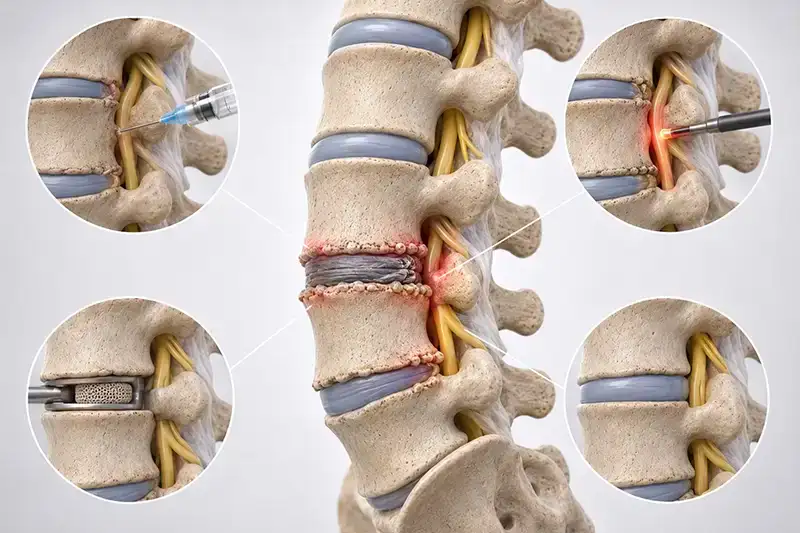
At Shore Spine & Pain in New Jersey, Dr. Woska takes a stepwise approach to degenerative disc disease, including:
Interventional Pain Management:
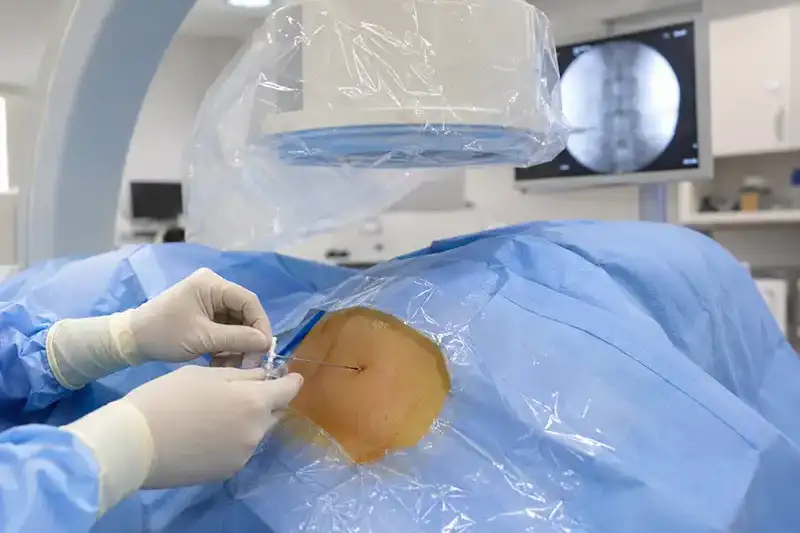
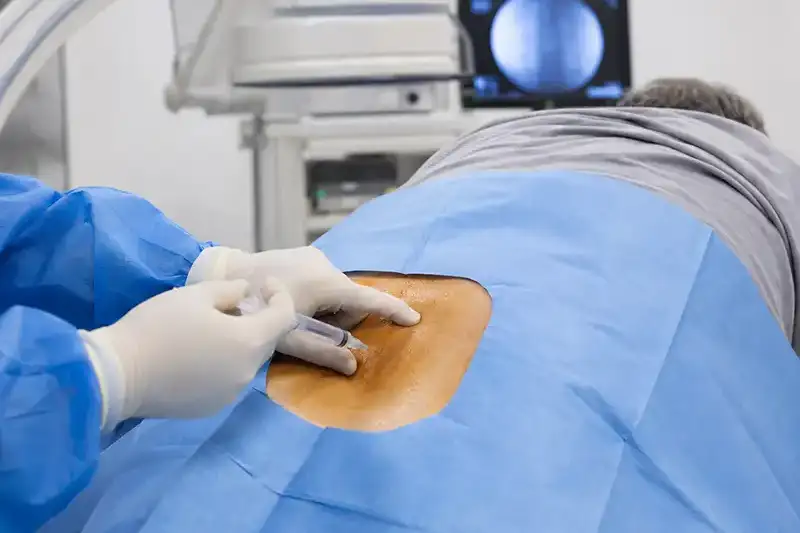
- Epidural Steroid Injections: Anti-inflammatory medication delivered directly to the affected nerve roots, providing targeted relief that oral medications often cannot achieve.
- Facet Joint Injections: When disc degeneration has placed added stress on the surrounding facet joints, targeted injections can address both the pain and its source simultaneously.
- Radiofrequency Ablation: For confirmed facet joint involvement, radiofrequency ablation disrupts the nerve signals transmitting pain from the affected joints, offering relief that can last months to years.
- Discography: When the disc itself is suspected as the primary pain source, discography precisely confirms the diagnosis before further treatment decisions are made.
- Spinal Cord Stimulation: For chronic or refractory DDD pain that has not responded to other treatments, spinal cord stimulation offers a long-term option for managing persistent symptoms.
No matter where you are in your degenerative disc disease journey, Shore Spine & Pain is committed to providing compassionate, expert care aimed at restoring your quality of life. Your treatment plan will be crafted specifically for you, with your goals, your timeline, and your wellbeing at the center of every decision.
Frequently Asked Questions about Degenerative Disc Disease
Can I still exercise with degenerative disc disease?
In most cases, staying active is not only safe but encouraged. Complete rest tends to weaken the muscles that support the spine, which can make symptoms worse over time. Low-impact activities such as walking, swimming, and targeted core strengthening are generally well tolerated and can help reduce mechanical load on the affected discs. The key is understanding which movements aggravate your specific condition and building activity around that, something Dr. Woska addresses as part of every individualized care plan at Shore Spine & Pain.
Does degenerative disc disease always cause pain?
Not necessarily. Many people have measurable disc degeneration visible on imaging but experience little to no discomfort. Pain tends to develop when degeneration reaches a point where the disc can no longer adequately protect the surrounding nerves or when the structural changes begin affecting spinal mechanics more broadly. The absence of pain does not mean the condition is absent, and the presence of degeneration on an MRI does not automatically mean symptoms will worsen or that aggressive treatment is needed.
Is degenerative disc disease the same as spinal arthritis?
They are related but not identical. Spinal arthritis, or osteoarthritis of the spine, refers specifically to the breakdown of cartilage in the facet joints. Degenerative disc disease refers to the breakdown of the intervertebral discs themselves. The two conditions frequently occur together, since disc degeneration alters the mechanics of the spine in ways that place added stress on the facet joints over time.
What is the difference between degenerative disc disease and a herniated disc?
Degenerative disc disease describes the gradual breakdown of disc tissue over time, a process that may or may not cause symptoms. A herniated disc occurs when the inner material of a disc breaks through the outer wall and presses on a nearby nerve. DDD can increase the likelihood of a herniation, but the two are distinct conditions that may require different treatment approaches.
Can degenerative disc disease cause permanent nerve damage?
When nerve compression from a degenerating disc is identified and treated appropriately, permanent damage is unlikely. However, if significant nerve compression goes unaddressed for an extended period, there is a risk of lasting changes to nerve function. This is one of the reasons a thorough evaluation at Shore Spine & Pain in New Jersey is important when symptoms include persistent numbness, weakness, or radiating pain.