What is Spondylolisthesis?
The stability of your spine depends on every vertebra staying precisely where it belongs. Each bone in the spinal column is anchored in position by a network of discs, facet joints, ligaments, and supporting musculature that distributes load evenly and keeps the entire structure aligned.
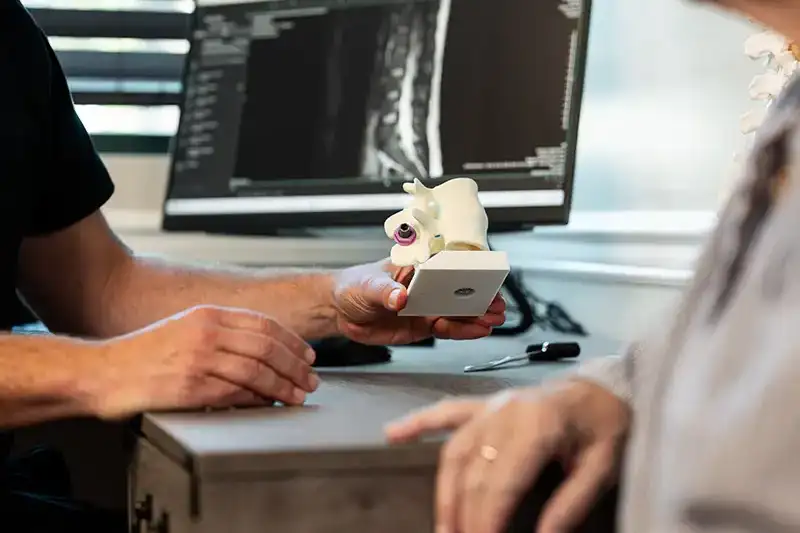
Spondylolisthesis occurs when a vertebra shifts forward relative to the one below it, a displacement that alters spinal mechanics, reduces the space available for the spinal cord and nerve roots, and places structures that were never designed to bear that kind of stress under significant strain. Spondylolisthesis most commonly develops in the low back/lumbar spine, though cervical involvement is also possible.
Spondylolisthesis symptoms can be easy to overlook. If you’re experiencing back pain, leg weakness, or instability, Shore Spine & Pain serves patients in Central New Jersey and is ready to help you find out what’s behind your symptoms.
What Causes Spondylolisthesis?
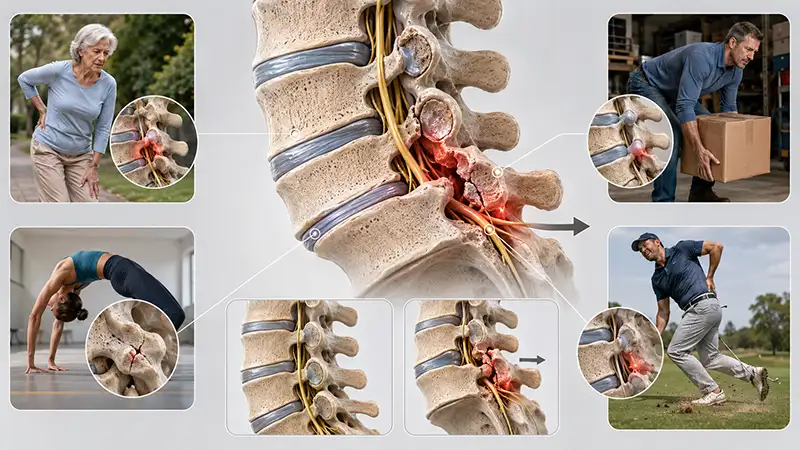
Several distinct factors can cause a vertebra to slip out of position. The most common is spinal disc degeneration as discs lose height and the joints that stabilize the spine break down, the structural support that keeps each vertebra in place gradually weakens. Without that support, slippage can occur.
Stress fractures are another significant cause. A small fracture in the section of bone that anchors a vertebra can rob it of its stability and allow it to shift forward. These fractures are often the result of repetitive spinal stress rather than a single injury.
In some people, the cause is structural from the start. A spinal abnormality present from birth can create an inherent vulnerability to slippage that may not produce symptoms until later in life.
Acute trauma, such as a serious fall or car accident, can fracture spinal structures suddenly, causing immediate instability. And in rare cases, an underlying condition such as bone disease, infection, or cancer can compromise the integrity of the vertebrae to the point where slippage occurs.
If you are experiencing back or leg pain and are unsure of the cause, the specialists at Shore Spine & Pain in New Jersey can evaluate your symptoms and help you find answers.
Symptoms of Spondylolisthesis
Your experience with spondylolisthesis may be very different from someone else’s. The grade of slippage, the spinal level involved, the degree of nerve compression, and the duration of the condition all shape how symptoms appear. Common symptoms of spondylolisthesis include:
- Lower Back Pain
- Radiating Leg Pain
- Numbness and Tingling
- Leg Weakness
- Hamstring Tightness
- Postural and Gait Changes
- Flexion-Relieved Pain
- Bladder or Bowel Dysfunction
If any of these symptoms sound familiar, you don’t have to figure it out alone. The specialists at Shore Spine & Pain in New Jersey are here to evaluate what you’re experiencing and help you understand what’s behind it.
Treatments We Offer for Spondylolisthesis
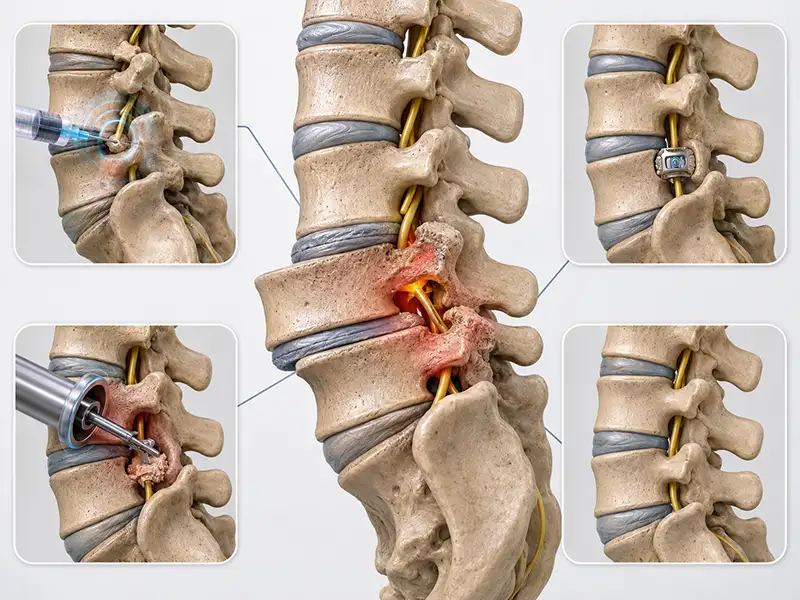
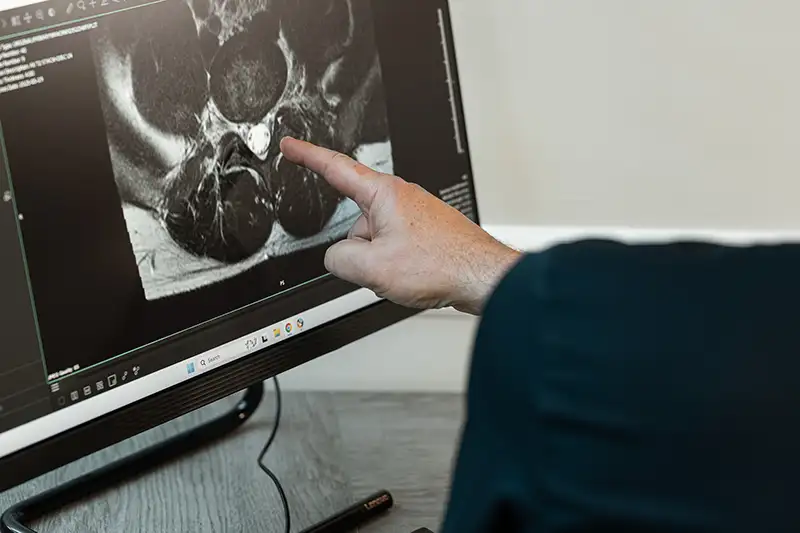
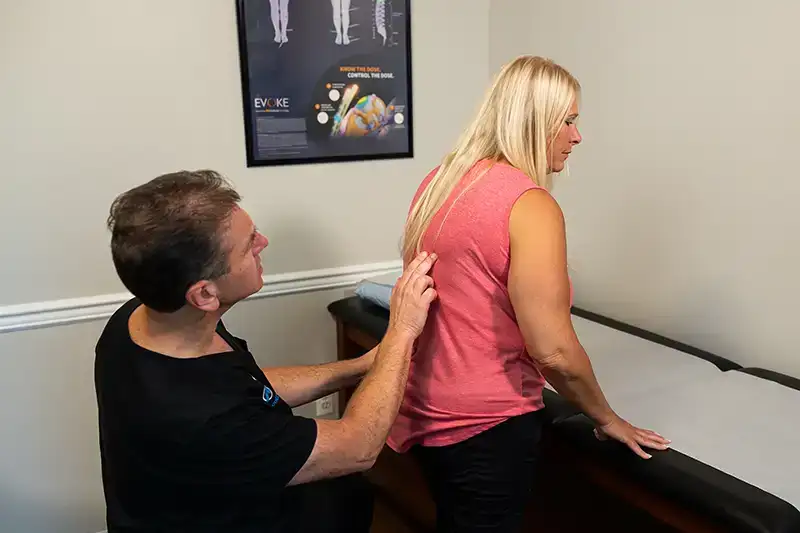
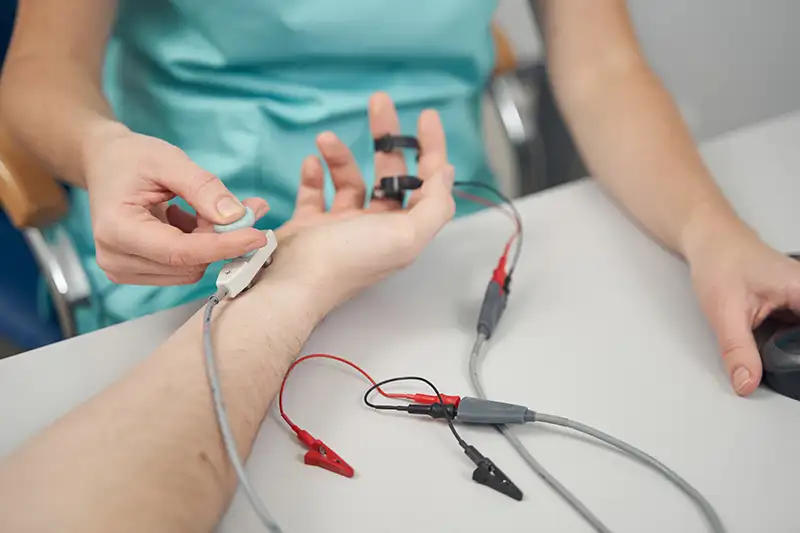
At Shore Spine & Pain in Lakewood, NJ and Shrewsbury, NJ, Dr. Woska builds every spondylolisthesis treatment plan on a foundation of precise diagnosis. The type of slip, the spinal level involved, the degree of nerve compromise, and the structural factors sustaining the instability all inform what comes next. Electrodiagnostic Testing (EMG) is incorporated when objective measurement of nerve function is needed to clarify the extent of involvement before any treatment path is committed to. Common treatments for spondylolisthesis include:
Interventional Pain Management:
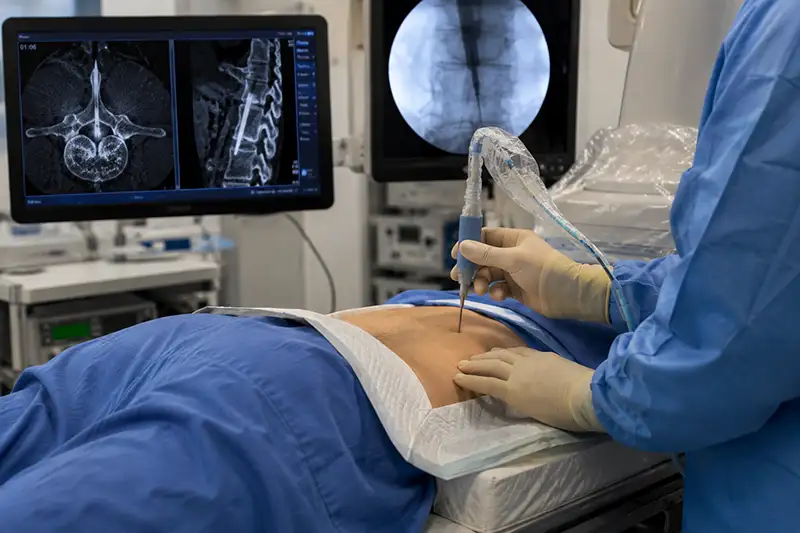
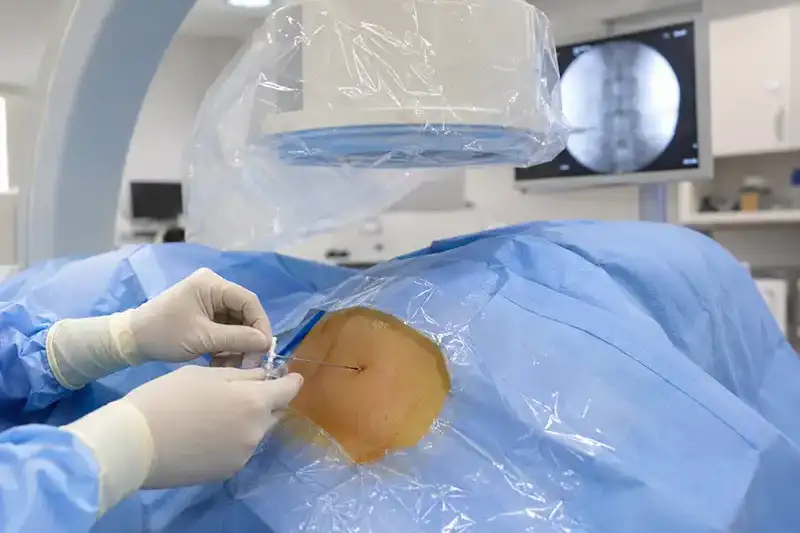
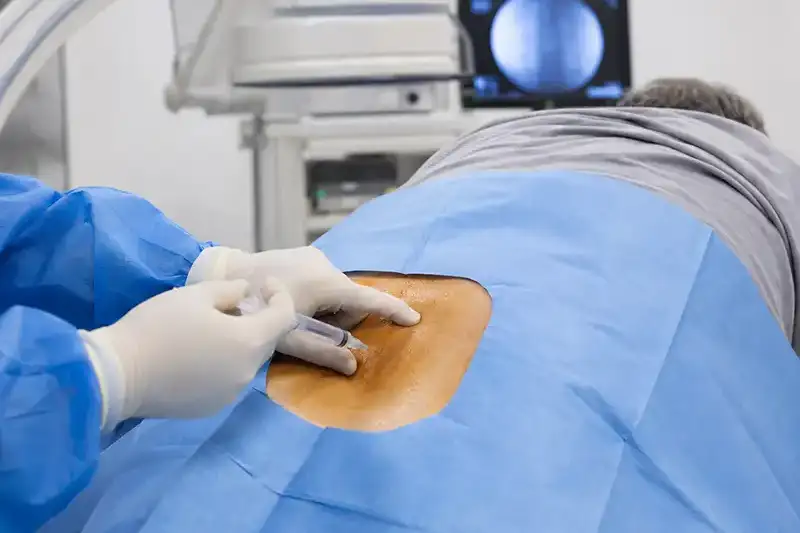
- Epidural Steroid Injections: If nerve pain is making it hard to function, an epidural steroid injection can calm the inflammation around the affected nerve and provide meaningful relief. That window of reduced pain gives your body a better chance to respond to the other treatments working to support your spine.
- Facet Joint Injections: Spondylolisthesis places extra strain on the facet joints near the affected vertebra, and those joints can quietly become a major source of pain. An injection of steroid and anesthetic into the joint can ease that pain and help clarify exactly where your symptoms are coming from.
- Radiofrequency Ablation: Also called RFA, this procedure targets the nerves responsible for transmitting pain signals from those joints, quieting them with heat energy and offering a durable step forward before any surgical options are explored.
- Discography: The discs near a slipped vertebra can wear down or become painful over time, sometimes without showing up clearly on standard imaging. Discography helps your care team identify exactly which disc is contributing to your pain, giving them the precise information needed to guide further treatment.
Minimally Invasive and Surgical Options:
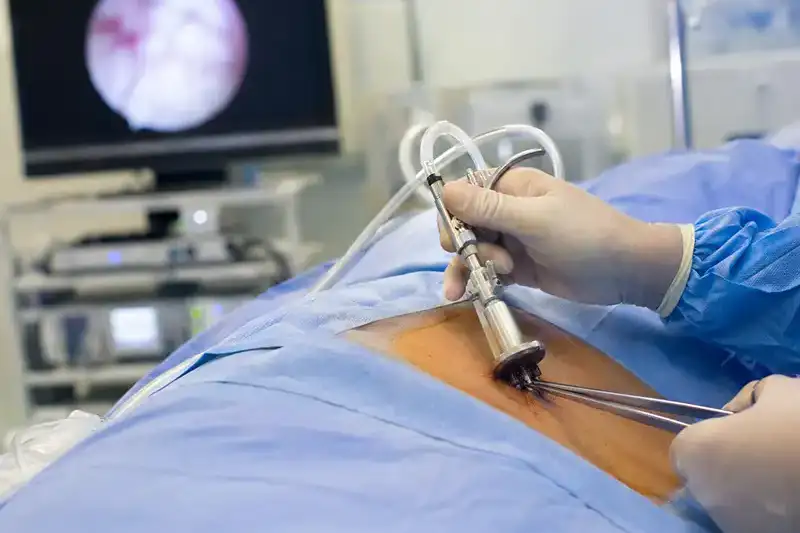
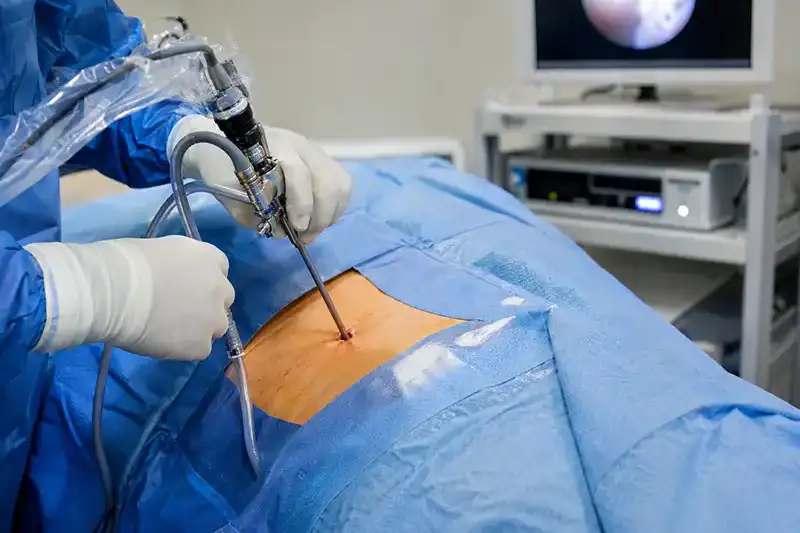
- Discectomy: When disc material near a slipped vertebra is pressing on a nerve, a minimally invasive discectomy removes the tissue that is causing the compression. The procedure is performed through a small access point, which means less disruption to the surrounding muscles and a faster recovery than traditional open surgery.
- Minimally Invasive Spinal Fusion: When other treatments have not provided lasting relief, spinal fusion stops the problematic movement at that segment of the spine. Performed through smaller incisions than traditional surgery, this approach reduces risk and helps patients return to normal activity more quickly.
- Spinal Cord Stimulation: This therapy works by intercepting pain signals before they reach the brain, providing ongoing relief for patients whose nerve pain has not responded to more conventional approaches.
- Peripheral Nerve Stimulation: This is a more focused alternative to spinal cord stimulation for patients whose pain follows a specific nerve route and delivers targeted relief directly to the source.
The right treatment for spondylolisthesis looks different for everyone. At Shore Spine & Pain in Lakewood and Shrewsbury, NJ, Dr. Woska builds each care plan around the individual, ensuring that what you receive reflects your specific condition, your priorities, and the life you want to get back to.
Frequently Asked Questions about Spondylolisthesis
What is the difference between spondylolisthesis and spondylolysis?
Spondylolysis is a stress fracture in a small section of bone that helps anchor a vertebra in place. Spondylolisthesis occurs when that fracture, or another cause of spinal instability, allows the vertebra to actually slip forward out of alignment. In other words, spondylolysis can lead to spondylolisthesis, but not always. Some people live with spondylolysis without ever developing slippage.
Can spondylolisthesis affect more than one spinal level at the same time?
Yes, though it is not common. Spondylolisthesis typically affects a single level, but advanced degeneration can involve multiple levels over time. When one segment becomes unstable, neighboring levels absorb the extra stress and can eventually become affected as well. A thorough diagnostic evaluation helps ensure that all contributing levels are identified and addressed.
Can spondylolisthesis heal on its own?
Once a vertebra has slipped out of position, it is unlikely to return to its original alignment without intervention. That said, many people are able to manage their symptoms effectively with the right interventional pain management. The goal of treatment is not always to reverse the slippage but to stabilize the spine, reduce pain, and prevent the condition from progressing.
Is it safe to exercise with spondylolisthesis?
High-impact activities and movements that place excessive stress on the spine can worsen symptoms, while targeted exercises that strengthen the core and support spinal stability can actually help. It is important to work with a specialist before starting or modifying an exercise routine to make sure you are not doing more harm than good.
What happens if spondylolisthesis is left untreated?
For some people, spondylolisthesis remains stable over time. For others, the slippage gradually worsens, increasing pressure on nearby nerves and accelerating breakdown of surrounding spinal structures. Symptoms that start as occasional back pain can develop into chronic pain, leg symptoms, and reduced mobility. If nerves are involved, prolonged compression can cause weakness or numbness that becomes harder to reverse the longer it goes unaddressed. Early evaluation is the best way to understand where your condition stands.