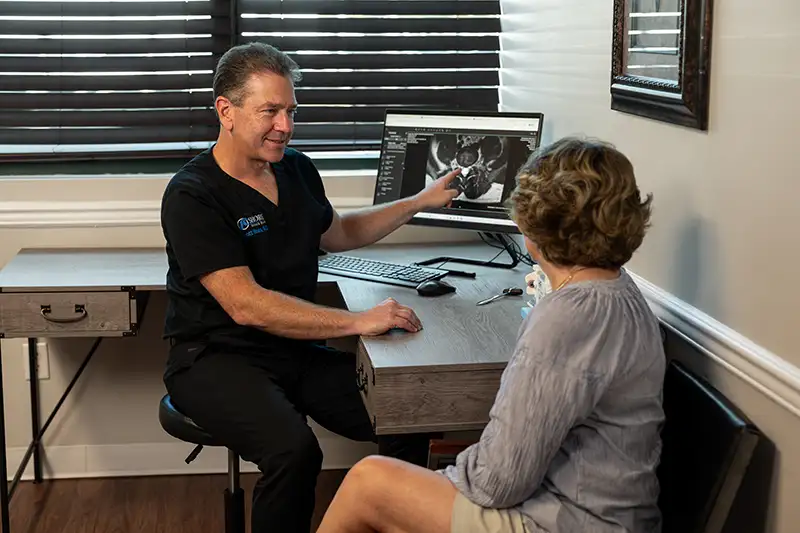
What is Failed Back Surgery Syndrome?
Persistent pain following spinal surgery is a recognized medical condition referred to as failed back surgery syndrome, or FBSS. The term is not an indication of surgical error or poor technique. Rather, it acknowledges a clinical reality that spinal pain is influenced by a broad range of biological, structural, and neurological factors that do not always respond predictably to surgical intervention, even when a procedure is performed correctly and without complication.
Failed back surgery syndrome can be physically and emotionally taxing, particularly for those who pursued surgery after exhausting conservative treatment options. Identifying the specific factors responsible for continued pain is the foundation of any effective management strategy. If spinal surgery did not deliver the relief you were hoping for, you still have options. Shore Spine & Pain is here to help you figure out what comes next.
What Causes Failed Back Surgery Syndrome?
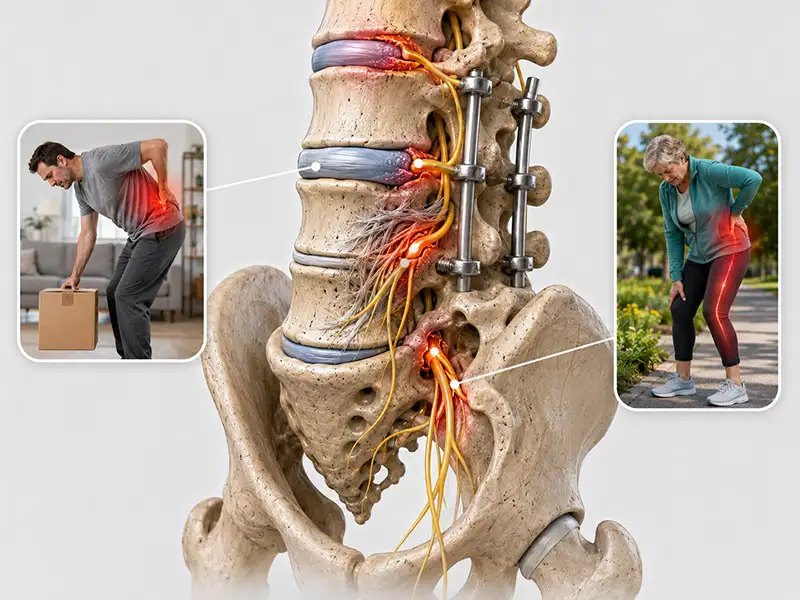
Continued pain after spinal surgery is not random. It has identifiable causes. Commons causes of failed back surgery syndrome include:
- Epidural Fibrosis: Scar tissue that forms around the spinal nerves after surgery, known as epidural fibrosis, is one of the more common causes of failed back surgery syndrome. As the tissue builds up, it can compress or irritate nerves and generate pain that closely resembles what the surgery was intended to resolve.
- Incomplete Diagnosis Prior to Surgery: In some cases the original source of pain was not fully identified before the procedure. If the underlying problem was at a different spinal level or involved a structure that was not addressed surgically, pain will persist regardless of how well the operation was performed.
- Adjacent Segment Degeneration: The spine can begin to compensate for the surgical site by placing added stress on neighboring levels, accelerating degeneration in those areas over time. This is a recognized consequence of spinal fusion in particular and is closely related to the development of degenerative disc disease at levels adjacent to the fusion site.
- Recurrent Disc Herniation: A herniated disc can recur at the same level following surgery, reproducing the original nerve compression and its associated symptoms.
- Spinal Instability: Surgical alteration of spinal anatomy can introduce or worsen instability at the affected segment, leading to pain that was not present before the procedure.
- Hardware-Related Complications: Implanted instrumentation such as screws, rods, or cages can shift, loosen, or generate localized pain responses that contribute to ongoing symptoms.
In many cases, more than one of these factors is present simultaneously, which is part of why failed back surgery syndrome can be difficult to manage without a thorough, updated evaluation at a practice experienced in post-surgical spine care, like Shore Spine & Pain.
Symptoms of Failed Back Surgery Syndrome
Ongoing low back pain is the most common complaint in failed back surgery syndrome, though the character of the pain often shifts after surgery. Some describe it as a deep, persistent ache. Others report burning or shooting sensations that travel into the legs, sometimes mimicking the original sciatica-like symptoms that prompted surgery in the first place. Numbness, tingling, and weakness in the legs or feet may linger or worsen, and extended walking or standing can become difficult to tolerate.
Sleep is frequently disrupted, and the cumulative effect of chronic pain on daily life, relationships, and mood should not be underestimated. Not every case of failed back surgery syndrome looks the same. Some manage relatively well with conservative care, while others find their symptoms severely limiting. Because FBSS can overlap with other spinal conditions including spinal stenosis and facet joint syndrome, updated imaging and a careful clinical assessment are typically needed before moving forward with any treatment plan.
Treatments We Offer for Failed Back Surgery Syndrome
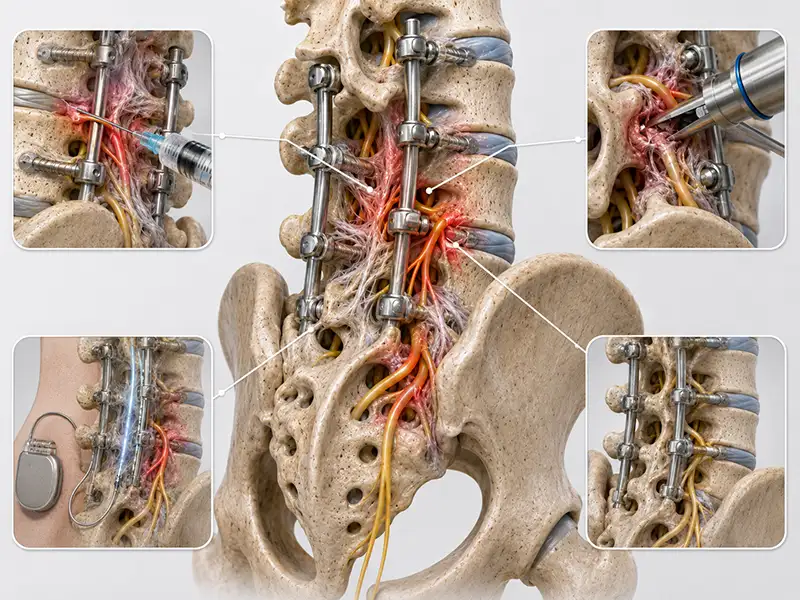
For those whose failed back surgery syndrome symptoms are manageable, a combination of medication and Epidural Steroid Injections may provide enough relief to meaningfully improve daily function. When those options fall short, the focus shifts to more targeted interventional treatments.
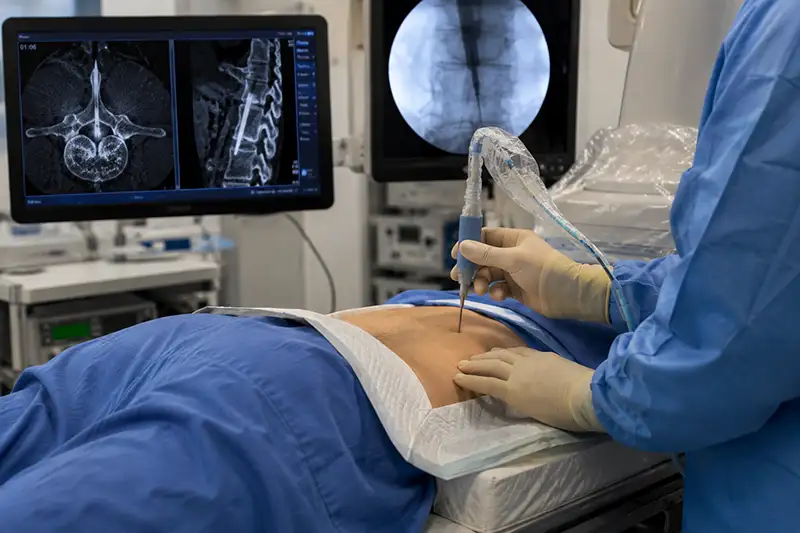
- Spinal Cord Stimulation has become one of the better-supported treatments for failed back surgery syndrome specifically, with a substantial body of clinical evidence behind it. It works by modifying the way pain signals travel to the brain, which can significantly reduce the intensity of symptoms.
- Peripheral Nerve Stimulation offers a complementary option by delivering targeted neuromodulation directly where it is needed. Repeat surgery is an option in select situations, though nonsurgical interventional care is often the more practical direction given the challenges of operating on a spine that has already been altered.
A thorough review of your surgical history, current symptoms, and imaging will guide the conversation about what failed back surgery syndrome treatment makes the most sense for you at Shore Spine & Pain in Lakewood, NJ or Shrewsbury, NJ.
Frequently Asked Questions about Failed Back Surgery Syndrome
What is the difference between a failed surgery and failed back surgery syndrome?
Failed back surgery syndrome does not mean the surgery itself was unsuccessful or improperly performed. A procedure can be executed without any complications and still leave a patient with ongoing pain. FBSS is a clinical term that describes the persistence or recurrence of symptoms after spinal surgery, regardless of how the operation went from a technical standpoint. The condition reflects the limitations of surgery in fully resolving pain that has complex neurological and structural contributors.
How long after surgery can FBSS be diagnosed?
There is no fixed timeline. Some patients notice that their pain never fully resolves following surgery, while others experience a period of improvement before symptoms return weeks, months, or even years later. A diagnosis is generally considered when pain persists beyond the expected recovery window and cannot be attributed to a new injury or unrelated condition.
Does Failed Back Surgery Syndrome mean my original surgery was performed incorrectly?
Not necessarily, and this is one of the most important distinctions to understand. Failed back surgery syndrome does not imply surgical error. In many cases the procedure was performed exactly as intended, but the underlying condition involved multiple pain sources that were not all addressed, or the spine’s response to surgery produced scar tissue or altered mechanics that generated new discomfort. Understanding this distinction matters because it shapes the direction of next steps. Dr. Woska reviews surgical history, current imaging, and symptom patterns together to identify what is actually driving ongoing pain before any treatment recommendation is made.
Will the pain from FBSS get worse over time without treatment?
The trajectory varies by individual and depends largely on the underlying cause. Some patients find their symptoms plateau, while others experience gradual worsening, particularly if contributing factors such as adjacent segment degeneration go unaddressed. Seeking a thorough evaluation sooner rather than later gives patients more options and a better opportunity to manage the condition before it significantly limits function and quality of life.
What should I bring to my first appointment if I suspect I have FBSS?
Any documentation related to your prior surgery is helpful, including operative reports, post-surgical imaging, and records of treatments you have tried since the procedure. A clear account of your current symptoms, when they began or returned, what makes them better or worse, and how they are affecting your daily life will also help your physician build a more complete picture and develop an appropriate evaluation and treatment plan.