What is a Basivertebral Nerve Ablation?
Basivertebral nerve ablation is a minimally invasive procedure designed to treat a specific and often overlooked source of chronic low back pain: the basivertebral nerve, a sensory nerve located inside the vertebral body itself. When the surfaces where your discs meet your spine become damaged or worn down over time, this nerve becomes sensitized and begins generating persistent pain that does not travel into the legs, does not respond to injections, and does not quit with rest. It is the kind of pain that standard treatments are not designed to reach, because its source is inside the bone rather than in the disc, facet joints, or nerve roots that most spinal treatments target.
The procedure works by delivering controlled radiofrequency energy directly to the nerve within the vertebral body, interrupting its ability to send pain signals to the brain. No general anesthesia is required, no permanent implant is left in the body, and the procedure is performed on an outpatient basis. For people who have been living with this type of deep, unrelenting back pain without a clear explanation or effective treatment, basivertebral nerve ablation can be a turning point.
At Shore Spine & Pain in Lakewood and Shrewsbury, NJ, Dr. Woska performs basivertebral nerve ablation as part of a comprehensive, diagnosis-driven approach to chronic low back pain. If prior treatments have not provided the relief you were looking for,contact us today to find out whether this procedure is the right next step for your situation.
Why is a Basivertebral Nerve Ablation Performed?
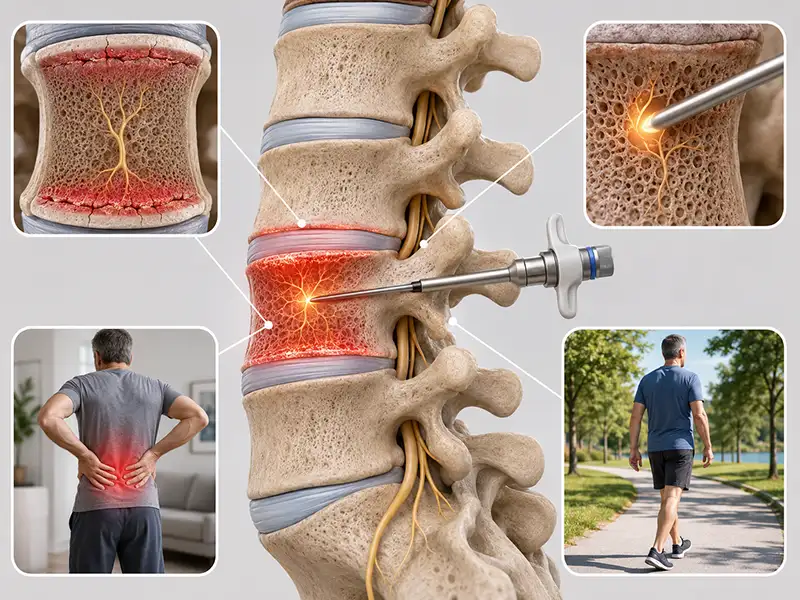
Chronic low back pain arising from vertebral endplate pathology is among the most difficult forms to treat effectively. Standard interventions, including epidural steroid injections and facet-targeted procedures, are designed to address inflammation or mechanical irritation along the outer spinal structures. For patients with confirmed endplate degeneration who have exhausted conservative management, this gap has historically left few viable options.
Basivertebral nerve ablation fills that gap. By targeting the specific nerve responsible for endplate-sourced pain, the procedure addresses a well-defined anatomical cause rather than providing nonspecific pain suppression.
You may be a candidate for basivertebral nerve ablation if:
- Chronic low back pain has persisted for 6 months or longer
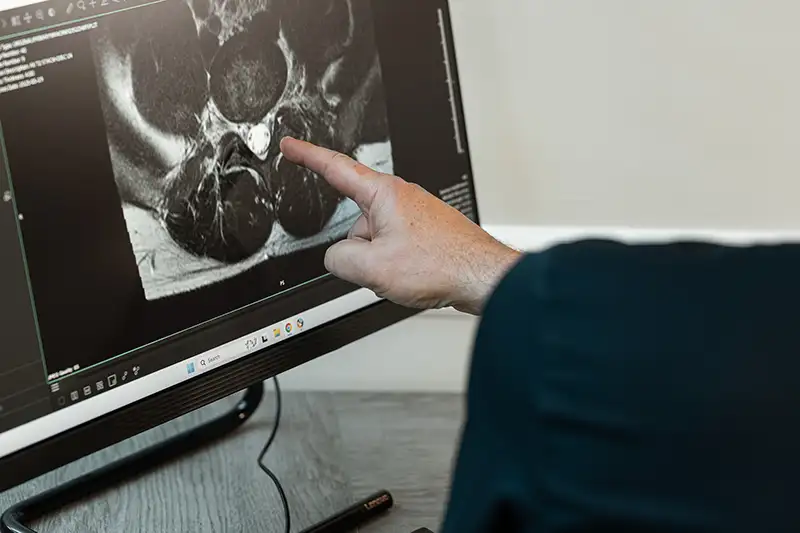
- MRI imaging confirms Modic Type 1 or Type 2 vertebral endplate changes at one or more lumbar levels
- Conservative treatments, including physical therapy and medication management, have not provided adequate or sustained relief
- Pain is predominantly axial, meaning centered in the low back rather than radiating significantly into the legs
Patients with primarily discogenic pain without endplate involvement, spinal instability, active infection, or certain implanted devices may not be appropriate candidates. A thorough evaluation is necessary to confirm that the imaging findings correspond to the patient’s actual pain pattern before any intervention is considered.
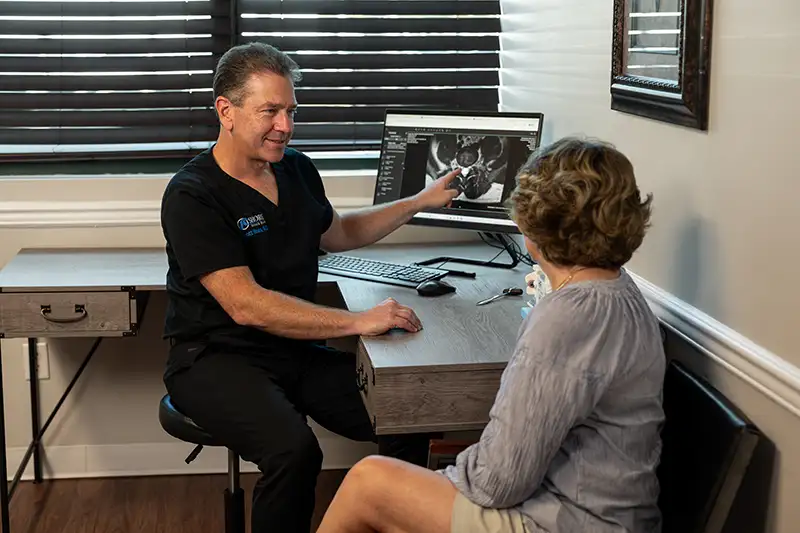
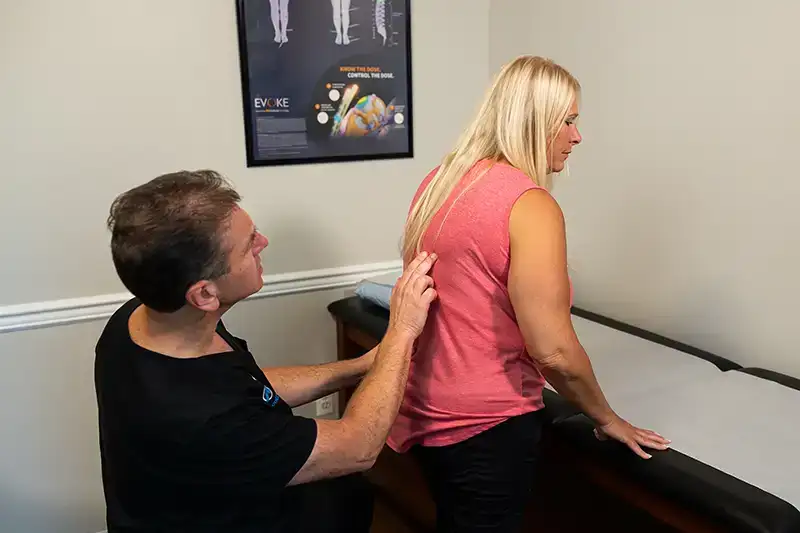
At Shore Spine and Pain, the selection process is deliberate. Dr. Woska reviews each patient’s imaging alongside their clinical history, symptom profile, and prior treatment course before determining whether basivertebral nerve ablation is the right next step.
How is a Basivertebral Nerve Ablation Performed?
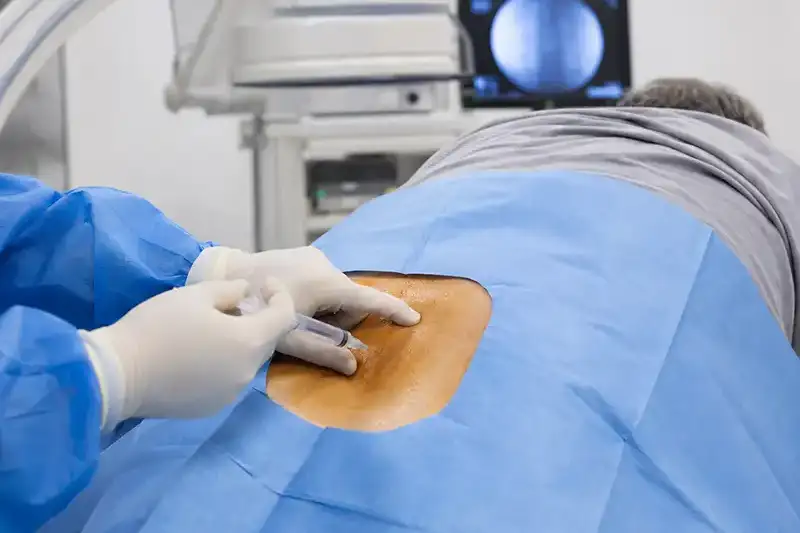
Basivertebral nerve ablation is performed on an outpatient basis at Shore Spine & Pain. You will be given a local anesthetic and light sedation to keep you comfortable throughout. General anesthesia is not required, and you go home the same day, typically within a few hours of arrival.
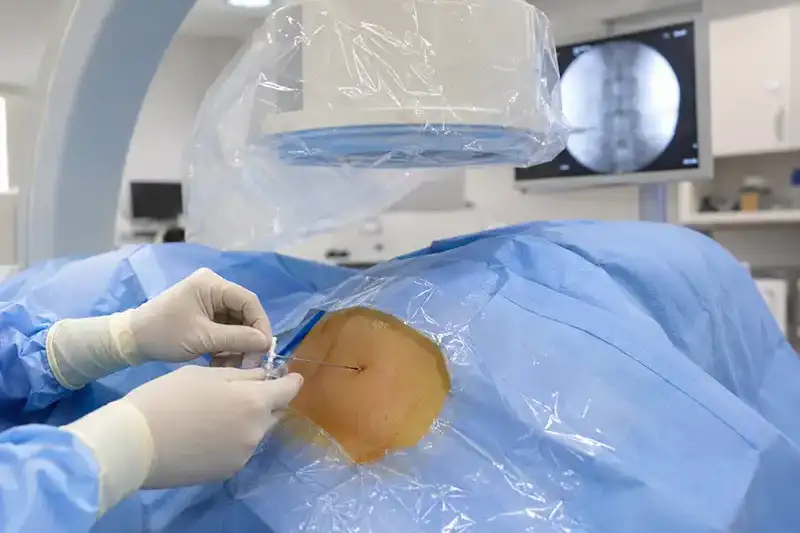
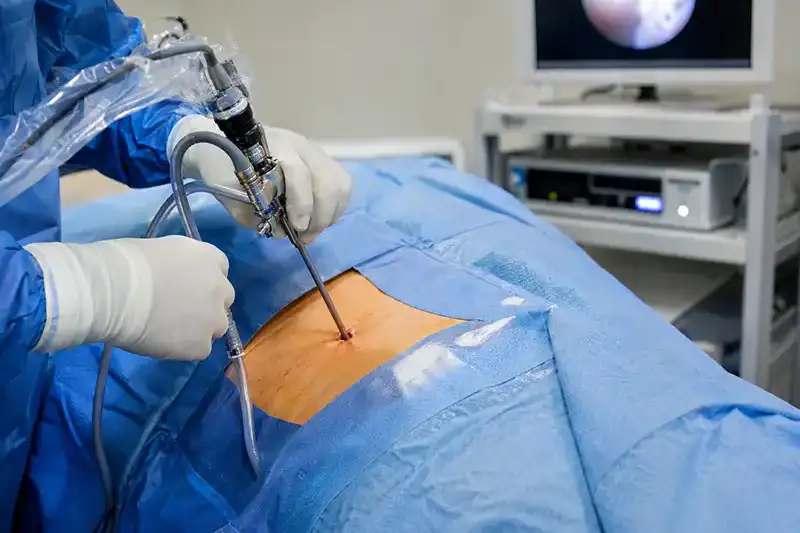
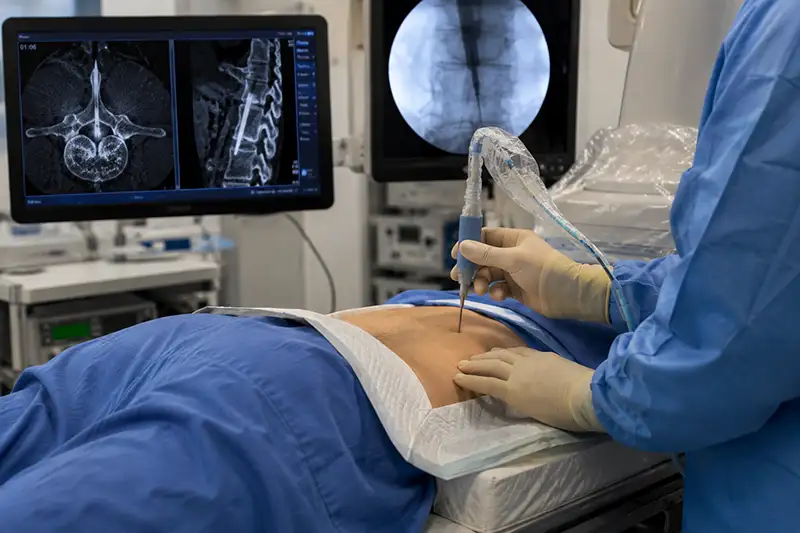
You will be positioned face-down on a procedure table while Dr. Woska uses live fluoroscopic imaging to guide a small specialized probe to the precise location of the basivertebral nerve inside the affected vertebra. Once the probe is correctly positioned, controlled radiofrequency energy is delivered to the nerve, interrupting its ability to transmit pain signals to the brain. If more than one vertebral level is involved, each is treated in sequence during the same visit. The procedure generally takes between 45 and 90 minutes depending on how many levels are addressed.
When the procedure is complete, no incision closure or sutures are needed. You will rest briefly in a recovery area before being cleared to go home with a companion driver.
What To Expect After a Basivertebral Nerve Ablation
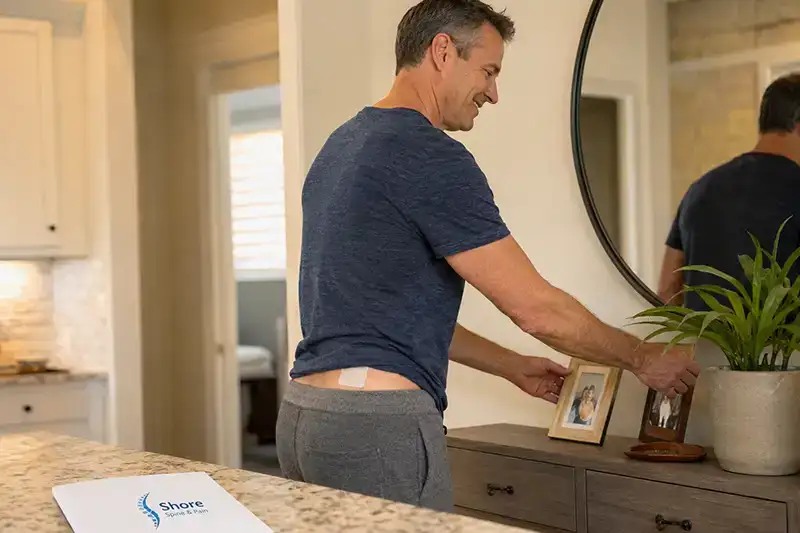
The recovery process following basivertebral nerve ablation is generally straightforward. Most patients experience some soreness at the access site in the days immediately after the procedure, which is expected given that the cannula passes through the pedicle of the vertebra. This discomfort typically resolves within 1 to 2 weeks and is manageable with over-the-counter analgesics. Patients are advised to avoid strenuous physical activity during this early recovery window.
Pain relief from basivertebral nerve ablation develops gradually rather than immediately. This is an important distinction from injection-based procedures, where anti-inflammatory effects may be felt within days. Nerve ablation requires time for the treated tissue to stop transmitting signals, and the body’s response continues to evolve over weeks and months. Most patients begin noticing meaningful improvement within 4 to 8 weeks of the procedure, with continued gains in the months that follow.
Clinical studies supporting basivertebral nerve ablation have demonstrated durable outcomes. A significant proportion of patients maintain substantial pain reduction at one year, and many report continued benefit beyond that point. Because the basivertebral nerve does not regenerate the way peripheral nerves typically do, successful ablation tends to produce long-lasting results.
If you have been living with chronic low back pain that has not responded to prior treatment, basivertebral nerve ablation may be the targeted solution you have not yet been offered. At Shore Spine & Pain in Lakewood and Shrewsbury, NJ, Dr. Woska will review your imaging, your symptom history, and your prior treatment experience to determine whether you are a candidate.
Contact us today to schedule a consultation and take the next step toward lasting relief.
Frequently Asked Questions about Basivertebral Nerve Ablation
Is basivertebral nerve ablation right for me if other treatments have already failed?
It may be, and for many people it is precisely the next step that prior treatments were not able to address. Basivertebral nerve ablation targets a pain source inside the vertebral body itself, which means it is designed for a type of chronic low back pain that injections, medications, and other interventional treatments are not built to reach. Good candidates typically have had symptoms for at least 6 months, have not found lasting relief through conservative care, and have MRI findings consistent with endplate degeneration at one or more lumbar levels. The imaging needs to match the clinical picture, which is why a thorough evaluation with Dr. Woska at Shore Spine & Pain in Lakewood or Shrewsbury, NJ is the right starting point.
How is basivertebral nerve ablation different from an epidural steroid injection or radiofrequency ablation?
Each of these procedures targets a different pain source. Epidural steroid injections address nerve root inflammation caused by disc compression or spinal narrowing. Radiofrequency ablation targets the small nerves transmitting pain from the facet joints. Basivertebral nerve ablation is distinct from both: it targets a nerve located inside the vertebral body itself, making it the appropriate option when the pain is originating from the endplates rather than from a disc, nerve root, or facet joint. Understanding which structure is generating your pain is what determines which treatment is most likely to work.
When will I start feeling relief?
Pain relief from basivertebral nerve ablation develops gradually rather than immediately. Most people begin noticing meaningful improvement within 4 to 8 weeks of the procedure, with continued gains over the months that follow. This timeline is different from what you might experience after an injection, and it is a normal part of how nerve ablation works. Incremental progress over weeks is expected, and Dr. Woska monitors your response during follow-up appointments at Shore Spine & Pain to ensure your recovery is on track.
How long do the results last?
Clinical studies have shown durable outcomes for basivertebral nerve ablation, with many people maintaining substantial pain reduction at one year and beyond. Unlike peripheral sensory nerves, the basivertebral nerve does not regenerate in the same way, which means successful ablation tends to produce longer-lasting relief than injection-based treatments. Individual results vary based on the extent of endplate degeneration and your overall clinical picture, both of which Dr. Woska reviews in full before the procedure.
Does insurance cover basivertebral nerve ablation?
Coverage varies by insurer and plan. The procedure has established billing codes and is covered by a growing number of commercial payers as well as Medicare under qualifying clinical criteria. The team at Shore Spine & Pain in Lakewood and Shrewsbury, NJ works with you to verify your specific benefits and manage the prior authorization process before anything is scheduled. Contact us with any questions about your coverage or to get started.