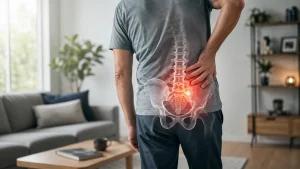

You were lifting, twisting, or reaching for something on the job, and your back caught. Not a slow ache, but a sudden pull that stopped you where you stood. Now you are frozen for a second: finish the shift, or stop right now?
Stop right now. A back injury from work is worth a few minutes of caution even when it feels minor. Set down whatever you are holding, tell a supervisor so it is on record, and start simple care while the soreness is fresh. Here is the part the worry drowns out: most work-related back strains settle within a few weeks when you handle the first days sensibly. Back injuries are one of the most common reasons people miss work, and lifting is behind a large share of them, so what happened to you is ordinary and usually gets better.
What To Do in the First 48 Hours After Hurting Your Back at Work?
If the question on a loop in your head is some version of “I hurt my back at work, what should I do,” the honest answer for the first two days is smaller than you expect. You are not fixing anything yet, only keeping it from getting worse while your back settles.
Stop and protect your back instead of pushing through the task, because finishing the lift is how a mild strain becomes a real one. Report the injury the same day so it is on record. One step most people skip is worth doing while it is fresh: write down what happened. The exact movement, the time, what you felt right away versus an hour later, and whether anything traveled below your waist. Those details blur within days, and a back injury from work is easier to sort out when a doctor can see how it began.
What Is Safe to Do at Home After a Workplace Back Injury?
For a fresh strain, the care that helps is simple: the goal is comfort, not a cure. For the first day or two, ice calms the inflammation, about fifteen minutes at a time with a towel against your skin. After that, switch to heat: ice while it feels inflamed, heat once it feels tight. Stay lightly on your feet with short walks rather than lying still, and use an over-the-counter pain reliever as the label directs. Small changes help too, like sitting supported and sleeping on your side with a pillow between your knees.
Do not spend the day flat in bed, since hours of stillness stiffen a back that needs motion. And do not go back to heavy lifting to test whether it loosened up, the most common way a strain that would have settled turns into a longer problem. If relief stalls, or the pain turns back the wrong way instead of easing, that is your back telling you it is worth a closer look.
What Does It Mean If the Pain Travels Down Your Leg?
The question worth answering first is not which part of your spine is involved. It is simpler: is this the ordinary kind of hurt, or the kind that means you should get seen? The way the pain spreads gives you an early read.
Most lifting strains stay put. The pain sits across your low back, feels tight or sore to the touch, and eases over a week or two. What changes the picture is pain that travels down your leg. Pain that shoots or burns below the knee, or numbness, tingling, or weakness in a leg or foot, means a nerve may be involved, not just a muscle, and that is worth getting looked at rather than waiting out.
This is the heart of muscle strain vs herniated disc, and why guessing on your own is a poor plan. The same lift can hurt very different things depending on what took the load, and early on the two can feel alike. The details that separate a herniated disc from a strain are worth knowing if the leg symptoms stick around. And if this is not your first occurrence, and the pain keeps returning in the same pattern, telling a disc apart from a facet joint is its own question worth sorting out.
What Is Safe to Do at Home After a Workplace Back Injury?
For a fresh strain, the care that helps is simple: the goal is comfort, not a cure. For the first day or two, ice calms the inflammation, about fifteen minutes at a time with a towel against your skin. After that, switch to heat: ice while it feels inflamed, heat once it feels tight. Stay lightly on your feet with short walks rather than lying still, and use an over-the-counter pain reliever as the label directs. Small changes help too, like sitting supported and sleeping on your side with a pillow between your knees.
Do not spend the day flat in bed, since hours of stillness stiffen a back that needs motion. And do not go back to heavy lifting to test whether it loosened up, the most common way a strain that would have settled turns into a longer problem. If relief stalls, or the pain turns back the wrong way instead of easing, that is your back telling you it is worth a closer look.
When Does a Work Injury Need to Be Evaluated?
Get evaluated if the pain runs below your knee, or if you feel numbness, tingling, or weakness in a leg or foot, since those point to a nerve rather than a muscle. The same goes for pain that has not eased after a couple of weeks, and for any injury from a fall or a direct hit rather than a straightforward lift. A few signs mean you should be seen right away: changes in bladder or bowel control, or numbness spreading through the area you would sit on, are rare but call for immediate care.
Here is what makes a work injury different: recovering is only half of it. You also have to return to the same lifting and bending that hurt you, and going back on a guess is a common way a first injury becomes a repeat one. That is how Dr. Woska works: rather than treat the pain by name and hope, he finds the source first, listening to how the injury happened, examining you, and imaging only when needed.
If you are still trying to understand what happened, that is the right time to ask. You can learn how Dr. Woska approaches diagnosis or request an appointment whenever you want a clearer answer.