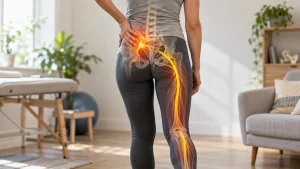
If you have a herniated disc, you probably know how it goes. You finally get into bed, and the ache in your lower back or the pain running down your leg is all you can think about.
When it comes to sleeping positions for herniated disc pain, 2 tend to help the most: lying on your side with a pillow between your knees, or on your back with a pillow under them. Both keep your spine straight and supported. Sleeping on your stomach does the opposite, so it is the position to avoid.
The good news is that most herniated discs shrink over 6 to 9 months as the body reabsorbs them, and the pain often eases along the way. If you are managing a herniated disc in your lower back at home, the right position can make your nights much easier while that happens.
What Are the Best Sleeping Positions for Herniated Disc?
Side sleeping with a pillow between your knees and back sleeping with a pillow under your knees are the 2 positions most likely to ease herniated disc pain. Both hold your lower back close to its natural curve and keep your pelvis from twisting or sagging, which takes strain off the irritated disc and the nerve beside it. A 2025 systematic review in Musculoskeletal Care found that back sleeping was associated with less low back pain, while side-lying helped when the spine stayed well supported and made pain worse when it did not.
Side Sleeping with a Pillow between Your Knees
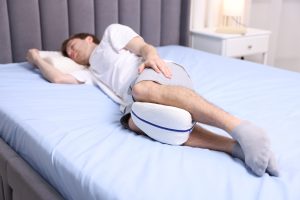
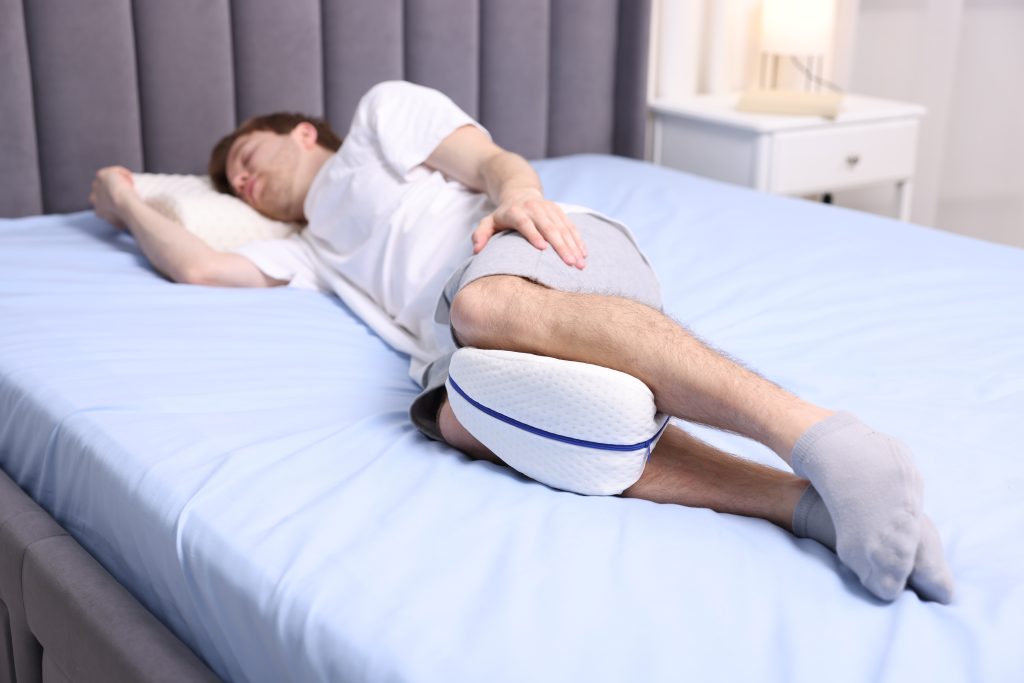
Lie on your side with your knees slightly bent, a firm pillow between them, and a head pillow that keeps your neck level. The knee pillow is what makes side sleeping work, because without one your top knee drops forward and pulls your lower spine into a slight twist. Avoid curling tightly into a ball, which bends the spine forward and can strain the disc.
Back Sleeping with a Pillow under Your Knees
Slide a pillow or rolled blanket under your knees and use a thin pillow under your head. The slight bend at the knees relaxes the muscles of your lower back, which suits people whose pain eases when they lie flat. A mattress soft enough to let your hips sink can undo much of the benefit.
Reclined Sleeping
A recliner or wedge pillow, with your knees supported, can take pressure off overnight if standing tall hurts more than leaning forward. If sitting is what sets off your pain, skip the recliner, because it holds you in a seated bend all night.
How Should I Sleep with a Herniated Disc?
Sleep in the position that keeps your spine straight and your symptoms quiet, then adjust based on how you feel each morning. No single herniated disc sleeping position suits everyone, because the right choice depends on where the disc sits and which movements irritate it.
Disc pain in the lower back often gets worse with coughing, sneezing, straining, or leaning forward, so if those set you off, favor positions that keep you long and level, such as on your back or on your side with your knees only gently bent. The best sleeping position for sciatica follows the same idea, and many people with sciatica find it easier to lie with the painful leg on top, resting on a pillow.
Give each change 3 or 4 nights, and note how you feel on waking. Stiffness that loosens once you are moving is common, while pain that grows sharper each morning is worth raising with your doctor, since a herniated disc that keeps getting more irritated may need more than a better pillow.
Is Sleeping on Your Stomach Bad for Your Back?
Yes, for most people with back pain, stomach sleeping is the position most worth giving up. Lying face down lets your belly sink into the mattress, which arches the lower back, and it forces your head to stay turned to one side for hours.
The same 2025 review in Musculoskeletal Care also linked stomach sleeping with a higher risk of low back pain, because of the strain it puts on the lower spine.
Lifelong stomach sleepers rarely switch overnight. To limit lower back pain from sleeping on your stomach, start the night on your side and hug a body pillow against your chest, which gives some of the pressure you are used to. If you still end up face down, a thin pillow under your hips and lower stomach reduces the arch, and a flat pillow or none at all under your head keeps your neck straighter.
What Is the Best Sleeping Position for Lower Back Pain?
For lower back pain in general, side sleeping with a pillow between your knees is the best starting point, with back sleeping and a pillow under your knees close behind. The finer details depend on what is causing the pain, and not every sore lower back comes from a disc.
Pain from the facet joints, the small hinges at the back of the spine, tends to flare when you lean backward or stand for long periods. People with facet pain often prefer lying on their side with their knees bent a little more, which gently opens those joints.
A disc, by contrast, may protest when you curl forward. If you are not sure which one is behind your pain, the clues for telling disc pain from facet joint pain usually show up in how you move during the day.
How to Relieve Lower Back Pain While Sleeping
Small changes to your bed, pillows, and bedtime routine can help relieve lower back pain while sleeping, often within a few nights.
With mattresses, firmer is not automatically better. In a randomized trial of 313 adults with chronic low back pain published in The Lancet, people who slept on medium-firm mattresses for 90 days reported less pain in bed, less pain on rising, and less disability than people who slept on firm ones. Participants in that study had back pain without pain traveling down the leg, so treat the finding as a helpful guide rather than a firm rule for disc pain.
The right pillow for lower back pain when sleeping is usually a firm one between the knees, since it holds its shape through the night better than a soft one. On your back, a small rolled towel under your waist can support the curve of your lower spine. When it is time to get up, roll onto your side, lower your legs over the edge of the bed, and push up with your arms instead of sitting straight up.
The hour before bed counts too. Back pain when sleeping often starts on the couch, where a long, slumped evening leaves the spine sore before you lie down. Poor sleep and pain also tend to feed each other, and chronic pain can weigh on your mood as well, so mention it to your doctor if you have been feeling low.
When Is Back Pain at Night a Reason to See a Spine Specialist?
Back pain at night deserves a spine specialist’s attention when position changes stop helping, when leg symptoms are getting worse, or when the pain wakes you no matter how you lie. Better sleep supports healing, but no pillow can take pressure off a nerve that is badly pinched.
Book an evaluation with a spine specialist in Lakewood or Shrewsbury if leg pain, numbness, or tingling has not improved after about 6 weeks, if one leg feels weaker than the other, or if lost sleep is wearing down your work and daily life. Get emergency care right away for any of the following:
- New trouble urinating, or loss of bladder or bowel control
- Numbness in the groin, inner thighs, or the area you sit on
- Leg weakness that is quickly getting worse
- Back pain with a fever, or pain that began after a serious fall or accident
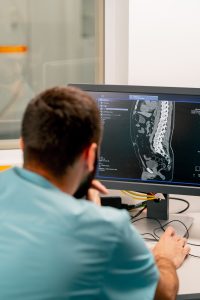
At Shore Spine & Pain in Lakewood and Shrewsbury, NJ, Dr. Woska starts by finding the source through your history, a hands-on exam, and imaging when needed. For many people, an epidural steroid injection can calm the inflamed nerve enough to sleep and move more comfortably while the disc heals. When leg pain persists despite that care, minimally invasive spine surgery (MISS) options such as endoscopic discectomy can remove the part of the disc pressing on the nerve.
Get Help for Herniated Disc Pain in Lakewood and Shrewsbury, NJ
When it comes to sleeping positions for herniated disc pain, side and back sleeping lead the way, and stomach sleeping is the one to give up. Treat these changes as support for your recovery, working alongside your treatment plan, and keep taking any medication your doctor has prescribed.
If back or leg pain is still costing you sleep, request an appointment at our office in Lakewood, NJ, or Shrewsbury, NJ. We see patients from across the Jersey Shore, including Monmouth and Ocean County, and beyond.